

10 Nursery Greenhouse Tips for Global Buyers
Buying a Nursery Greenhouse across borders involves more than comparing prices and steel specifications. Global buyers must assess climate, crop type, local construction standards, shipping conditions, and after-sales support before signing a purchase agreement. A greenhouse designed for mild coastal weather may fail under heavy snow, strong sunlight, or tropical humidity. The right choice begins with evidence, not attractive photographs.
Experienced growers usually examine the frame, covering material, ventilation, irrigation compatibility, and temperature-control systems together. Galvanized steel can resist corrosion, but coating thickness and manufacturing quality still matter. Polycarbonate panels may offer better insulation, while polyethylene film can reduce initial costs and simplify replacement. Small details count. Check door dimensions, drainage paths, spare-part availability, and electrical requirements before shipment.
This guide presents ten practical Nursery Greenhouse tips for international buyers. It focuses on supplier verification, realistic performance expectations, installation planning, and long-term operating costs. Product certificates can support trust, but they should be checked against recognized testing bodies and local requirements. A supplier’s case studies are useful, although they may not reveal every maintenance problem. Ask for references from farms with similar climates and production goals.
There is no universal greenhouse model. Even experienced buyers can overlook wind exposure or labor routines. That is worth admitting. Careful questions, documented specifications, and independent technical advice can prevent expensive mistakes. With a structured evaluation, buyers can select a safer, more efficient facility and build a stronger relationship with a reliable manufacturer.
Understanding Nursery Greenhouses and Their Role in Plant Production
Nursery Greenhouse Tips for Global Buyers
Understanding Nursery Greenhouses and Their Role in Plant Production
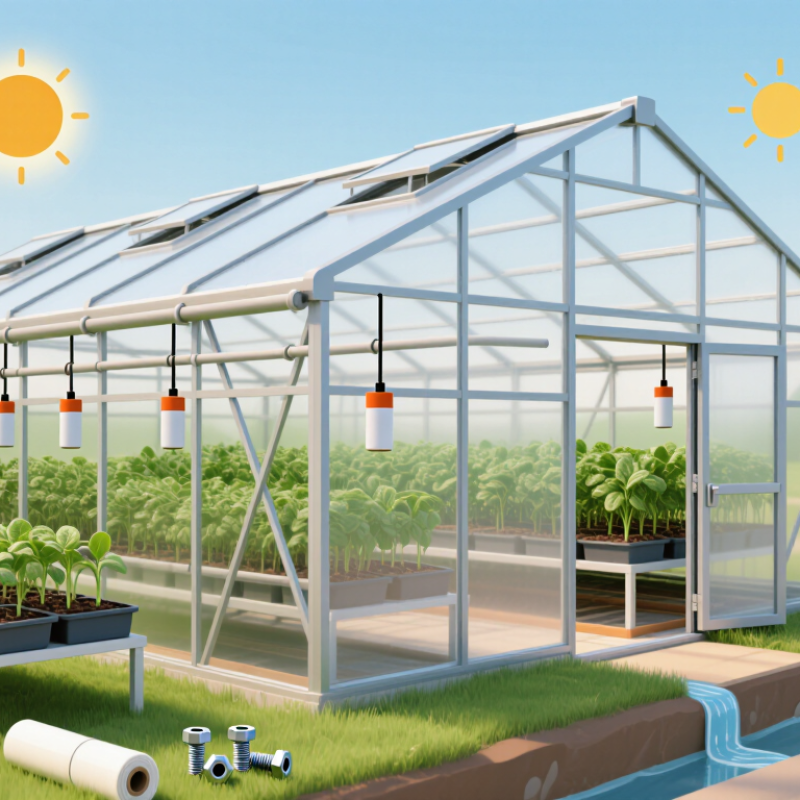
A nursery greenhouse is a controlled growing space for young plants, cuttings, and rooted seedlings. It protects crops from wind, heavy rain, pests, and sudden temperature changes. Unlike a simple shelter, it manages light, humidity, irrigation, airflow, and crop timing.
Global buyers should check ten practical points before choosing a greenhouse. Confirm the frame material, covering strength, ventilation design, drainage, irrigation layout, shading system, heating needs, bench spacing, local climate suitability, and maintenance access. A greenhouse for tropical seedlings may need strong airflow and shade. A colder region may require thermal screens and reliable heating. Local weather data matters more than attractive product images.
Small details affect plant quality. Water should reach each container evenly, while floors must drain without leaving puddles. Condensation on the roof can spread disease between crowded plants. Keep walking paths wide enough for carts and routine inspections. Ask for load ratings, installation guidance, spare-part availability, and clear warranty terms. These details support safer investment decisions.
Perfect control is unrealistic. Even a well-designed greenhouse can fail during a power cut or blocked drain. I have seen growers focus on equipment while ignoring daily cleaning and crop records. That mistake is expensive. Workers need simple training, and buyers should test airflow, irrigation pressure, and temperature readings before full production begins. A practical trial area can reveal weaknesses early.
10 Nursery Greenhouse Tips for Global Buyers - Understanding Nursery Greenhouses and Their Role in Plant Production
Practical planning ranges for selecting, operating, and comparing nursery greenhouse systems
| No. | Nursery Greenhouse Tip | Primary Production Objective | Typical Planning Range | Recommended Greenhouse Feature | Operational Benefit | Key Buyer Check |
|---|---|---|---|---|---|---|
| 1 | Match the structure to the climate | Protect young plants from excessive heat, cold, wind, rain, and pests. | Select ventilation and shading capacity according to local seasonal conditions; warm climates commonly require 20–40% shade during peak solar periods. | Roof vents, roll-up sidewalls, insect screens, shade curtains, and wind-rated framing. | Improves temperature control and reduces weather-related crop losses. | Confirm local wind, snow, seismic, drainage, and building-code requirements. |
| 2 | Prioritize reliable ventilation | Remove heat and humidity while maintaining fresh air around foliage. | Target approximately 0.5–1.0 air changes per minute in naturally ventilated production areas when conditions permit. | Continuous ridge ventilation, side ventilation, circulation fans, and automated vent controls. | Helps limit heat stress, condensation, and fungal disease pressure. | Check vent opening area, fan capacity, insect-screen pressure loss, and backup power. |
| 3 | Control propagation humidity carefully | Support germination and rooting without encouraging disease. | About 80–95% relative humidity during early propagation, gradually reduced as roots and leaves develop. | Fine-mist irrigation, humidity sensors, adjustable vents, and horizontal air circulation. | Promotes uniform rooting and reduces excessive leaf wetness when properly managed. | Ensure sensors are shielded from direct mist and controls can be calibrated. |
| 4 | Use crop-appropriate temperature targets | Maintain steady conditions for seedling growth and transplant quality. | Many warm-season seedlings perform well near 18–24°C air temperature; cool-season crops require lower crop-specific settings. | Heating, evaporative cooling, thermal screens, and programmable climate controls. | Reduces uneven growth, stretching, chilling injury, and heat stress. | Compare heating fuel availability, cooling-water quality, and annual operating costs. |
| 5 | Plan light levels by crop stage | Produce compact, vigorous plants with sufficient photosynthesis. | Seedling lighting is often planned around 100–300 µmol/m²/s PPFD and approximately 8–12 mol/m²/day DLI, depending on crop and stage. | Light-diffusing glazing, retractable shade, blackout curtains, and supplemental LED lighting where justified. | Improves uniformity and allows more predictable year-round scheduling. | Request measured light-transmission data and calculate electricity demand before adding lamps. |
| 6 | Design irrigation for uniformity | Deliver consistent water and nutrients to every tray or container. | Aim for application uniformity of at least 80% across the growing zone; higher uniformity supports more consistent crops. | Pressure-compensating emitters, boom irrigation, filtration, fertigation, and runoff collection. | Reduces overwatering, dry spots, fertilizer waste, and crop-size variation. | Test flow rates, pressure, filtration, water alkalinity, salinity, and drainage. |
| 7 | Allow enough working space | Maintain airflow, simplify handling, and prevent plant contact. | Typical nursery layouts may use approximately 25–60 plants/m², depending on container size, crop type, and finishing stage. | Adjustable benches, wide service aisles, trolley access, and designated quarantine zones. | Improves labor efficiency and decreases mechanical damage and disease spread. | Calculate usable growing area separately from aisles, equipment zones, and service corridors. |
| 8 | Choose hygienic, durable materials | Reduce contamination and extend the useful life of the facility. | Use non-porous, cleanable surfaces in propagation and handling areas; maintain clear separation between clean and dirty workflows. | Galvanized framing, washable benches, sealed floors, footbaths, and screened openings. | Supports sanitation programs and lowers repair and replacement frequency. | Verify coating quality, corrosion resistance, drainage slope, warranty terms, and spare-part access. |
| 9 | Include pest exclusion and monitoring | Prevent insects and pathogens from entering and spreading through the nursery. | Use insect screens with mesh selected for the target pests; finer mesh generally increases airflow resistance. | Double-door entry, screened vents, sticky monitoring cards, isolation bays, and cleanable surfaces. | Enables earlier detection and reduces reliance on emergency chemical treatments. | Check screen compatibility with fan systems and create a documented inspection schedule. |
| 10 | Measure water, energy, and crop performance | Improve profitability through repeatable production data. | Track germination rate, rooting time, crop loss, water use, energy use, and saleable plants per production cycle. | Climate sensors, flow meters, energy meters, data logging, alarms, and remote monitoring. | Makes operating costs visible and supports evidence-based process improvements. | Confirm sensor accuracy, data ownership, offline operation, alarm notifications, and staff training. |
Related Posts
-
What Are the Top Nursery Greenhouse Suppliers?
-
How to Choose the Best Vegetable Greenhouse for Your Farm?
-
7 Best Industrial Greenhouse Suppliers for Global Buyers?
-
China Best Multi Span Greenhouse Supplier?
-
Top Vegetable Greenhouse Manufacturers for Global Buyers
-
Why Choose a Single Span Greenhouse for Your Farm?