

How to Choose the Best Vegetable Greenhouse for Your Farm?
Choosing the right Vegetable Greenhouse is a production decision, not merely a construction purchase. Tomato vines may need tall bays, while lettuce benefits from tighter climate control and efficient airflow. The structure must match the crop.
Market evidence shows why this choice deserves careful attention. Grand View Research valued the global greenhouse market at approximately US$39.7 billion in 2022. Its report also projects strong growth through 2030, driven by controlled-environment farming and food-security concerns. The FAO’s The State of Food and Agriculture 2022 highlights technology’s role in improving productivity, resilience, and resource efficiency. However, market growth does not guarantee farm profitability. Electricity prices, labor availability, water quality, and local weather can change the calculation quickly.
Professor Dickson Despommier, a leading controlled-environment agriculture expert, famously said, “The future of agriculture is indoors.” His observation feels increasingly practical, especially when hail strikes young plants or summer heat closes a field for days. Still, a greenhouse is not a magic shield. Poor ventilation can leave tomato leaves wet, and weak irrigation design can waste thousands of liters. This guide examines glazing, frame strength, ventilation, heating, cooling, irrigation, automation, and long-term operating costs. It also considers a difficult question: is the most advanced system truly the best system for your farm? Sometimes, a simpler structure with reliable maintenance may outperform expensive technology. The answer depends on your crops, climate, budget, workforce, and expansion plans.
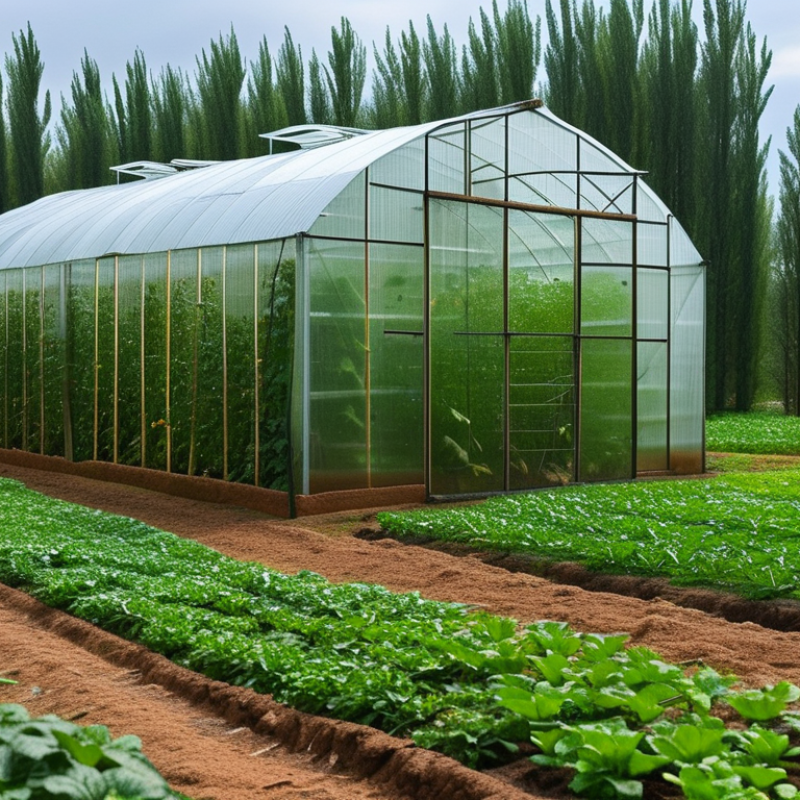
Farm Goals and Vegetable Greenhouse Requirements
How to Choose the Best Vegetable Greenhouse for Your Farm?
Farm goals should guide every greenhouse decision. A grower supplying local restaurants may need steady weekly harvests, while a seasonal market farmer may prioritize low construction and quick setup. List your target crops, selling months, expected volume, and available labor before comparing structures. Tomatoes need tall supports and strong ventilation. Leafy greens need cooler temperatures and efficient shade control. Root vegetables require suitable beds or deep containers.
Study your farm conditions carefully. Measure wind exposure, winter snow, sunlight, drainage, and access to water and electricity. A reliable greenhouse should include adjustable vents, strong framing, washable surfaces, and enough aisle space for carts. Irrigation should match your crop plan, not simply the cheapest installation. Poor drainage can damage roots within days. One planning mistake is choosing a large structure before calculating heating, cooling, and labor costs. Bigger is not always better. I still think many growers underestimate daily maintenance.
Tips: Keep a simple crop calendar beside the design plan. Visit a working greenhouse during hot and cold weather. Ask how often vents, screens, irrigation lines, and coverings need attention. Leave room for future changes, but avoid paying for equipment your farm cannot operate. A small sensor system may help track temperature and humidity, yet it cannot replace regular observation. Plants often reveal stress before a screen does.
How to Choose the Best Vegetable Greenhouse for Your Farm? - Farm Goals and Vegetable Greenhouse Requirements
| Farm Goal | Vegetable Greenhouse Requirement | Recommended Specification or Range | Suitable Crops | Why It Matters |
|---|---|---|---|---|
| Low-cost seasonal production | Simple protection from rain, wind, light frost, and common weather fluctuations | Unheated tunnel or hoop house; polyethylene film covering; side ventilation; approximately 4–6 m width for small-scale management | Tomatoes, cucumbers, peppers, lettuce, herbs | A basic structure can extend the growing season while keeping construction and operating costs relatively low. |
| Year-round vegetable production | Accurate control of temperature, humidity, irrigation, ventilation, and light | Multi-span or gutter-connected greenhouse; heating and cooling systems; automated vents; environmental sensors; insulated perimeter where climate requires it | Tomatoes, cucumbers, peppers, leafy greens, specialty vegetables | Continuous production requires stable crop conditions during both hot and cold periods. |
| High summer-temperature control | Rapid heat removal and reduced solar load | Roof and side vents with total vent area commonly around 15–25% of floor area; insect screens where needed; shade cloth or external shading; evaporative cooling for dry climates | Lettuce, spinach, herbs, cucumbers, peppers | Excess heat can reduce pollination, cause blossom drop, increase water demand, and lower produce quality. |
| Cold-climate or winter production | Heat retention, snow resistance, frost protection, and reliable energy supply | Double-layer film or rigid glazing; insulated end walls; properly sized heating system; strong frame designed for local wind and snow loads; backup power for critical controls | Kale, lettuce, spinach, herbs, winter tomatoes | Heat loss and structural damage risk increase in cold, snowy, and windy conditions. |
| High-light crop production | High light transmission with limited shading from the frame and covering | Clean, greenhouse-grade covering; transparent glazing selected for the climate; north–south orientation is often useful for more uniform light in many single-span layouts | Tomatoes, cucumbers, peppers, eggplants | Adequate light supports photosynthesis, flowering, fruit set, and yield. |
| Water-efficient production | Targeted irrigation, drainage control, and reduced evaporation | Drip irrigation or subirrigation; filtered water; fertigation equipment; moisture sensors; gutters or collection tanks where permitted | Tomatoes, cucumbers, peppers, strawberries, leafy greens | Applying water directly to the root zone can reduce waste and keep foliage drier than overhead irrigation. |
| Pest and disease reduction | Controlled entry, cleanable surfaces, filtered ventilation, and good air circulation | Insect netting sized for the target pest; entry vestibule or double-door access; smooth washable surfaces; horizontal airflow fans; adequate plant spacing | Leafy greens, herbs, tomatoes, cucumbers, peppers | Exclusion and sanitation help reduce pest entry and limit conditions that favor fungal and bacterial diseases. |
| Efficient labor and harvesting | Comfortable working height, clear paths, accessible crop rows, and efficient material movement | Main paths commonly 0.9–1.2 m wide; raised beds or benches selected according to equipment and worker access; adequate headroom for trellised crops | Leafy greens, herbs, tomatoes, cucumbers | Good layout reduces walking distance, crop damage, worker strain, and harvesting time. |
| Mechanized or commercial-scale expansion | Modular structure, efficient internal logistics, and space for future equipment | Gutter-connected bays; service corridors; dedicated packing and storage areas; structural capacity for screens, trellises, irrigation lines, and automation | High-wire tomatoes, cucumbers, peppers, leafy greens | A scalable design prevents costly reconstruction when production volume or automation increases. |
| Direct-to-consumer and premium markets | Consistent quality, harvest scheduling, traceability, and clean post-harvest handling | Separate harvest and packing zones; reliable cooling or short-term cold storage; irrigation records; crop compartments for staggered planting | Salad greens, herbs, cherry tomatoes, specialty peppers | Uniform supply and careful handling support freshness, appearance, and customer confidence. |
| Organic or reduced-input production | Prevention-based crop management and precise resource use | Strong ventilation; insect screens; biological control access; drip irrigation; approved sanitation materials; documented inputs and crop records | Leafy greens, herbs, tomatoes, cucumbers | Preventive controls help reduce dependence on corrective treatments and support compliance with applicable production standards. |
Related Posts
-
What Is the Best Smart Greenhouse from China?
-
How to Choose the Best Industrial Greenhouse for Your Needs?
-
What is the Best Multi-Span Greenhouse for Global Buyers?
-
How to Build a Vegetable Greenhouse for Optimal Crop Production?
-
Best Industrial Greenhouses in China for Global Buyers?
-
Why Choose an Industrial Greenhouse for Sustainable Farming?