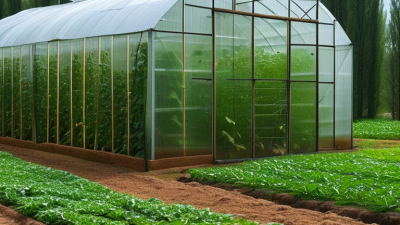
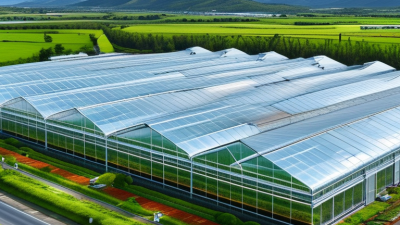
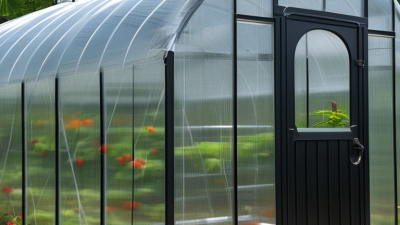
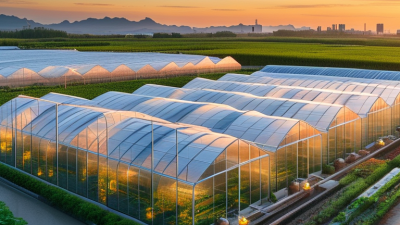
Plastic Film Greenhouse

7 Best Industrial Greenhouse Suppliers for Global Buyers?

Choosing the right Industrial Greenhouse supplier can shape crop quality, operating costs, and long-term business resilience. Global buyers face different climates, currencies, shipping conditions, and certification requirements. A supplier trusted in the Netherlands may not fit a project in Kenya, Canada, or Southeast Asia.

This guide reviews seven leading Industrial Greenhouse suppliers for international buyers. The comparison considers structural strength, climate-control systems, automation, energy efficiency, after-sales support, and installation experience. These factors matter when a greenhouse must withstand strong winds, heavy snow, intense sunlight, or high humidity. Dr. Erik Runkle, a respected greenhouse lighting researcher, states, “Light is the driver of plant growth.” His observation supports a wider truth: every greenhouse component affects production results.

Real projects also reveal uncomfortable details. A low quotation may exclude freight, foundations, sensors, software, or local training. A famous supplier may still provide slow support in a distant market. Some buyers focus too heavily on steel thickness and overlook ventilation performance. That can become expensive during a hot growing season. No supplier is perfect. Product claims also require careful verification.

The following overview aims to help commercial growers, investors, and agricultural developers ask better questions. It highlights practical strengths, possible limitations, and suitable applications for each company. Readers should still confirm references, warranty terms, local engineering approvals, and maintenance availability. Greenhouse technology changes quickly, and this evaluation may need future revision. That is a limitation worth admitting.
7 Best Industrial Greenhouse Suppliers for Global Buyers?

Industrial Greenhouse Market Scope: 80–90% Light Transmission and Global Demand

7 Best Industrial Greenhouse Suppliers for Global Buyers?

Industrial greenhouse buyers increasingly assess suppliers through measurable performance, not attractive catalogs. MarketsandMarkets estimates the global greenhouse horticulture market could grow from about USD 31 billion in 2022 to USD 47 billion by 2027. That expansion reflects stronger demand for local vegetables, year-round production, and controlled water use. However, market forecasts differ. They should guide planning, not replace regional testing.

For most industrial structures, 80–90% light transmission is a practical target for clear coverings, according to technical guidance from international greenhouse engineering literature. Actual performance depends on dust, condensation, structural frames, coating age, and solar angle. A supplier should provide tested transmission data, not a rounded sales claim. Ask for spectral curves, warranty terms, snow and wind-load calculations, ventilation rates, and replacement procedures. Small details matter.

Experience also changes the selection process. A humid coastal site needs corrosion protection, while a high-altitude farm may require stronger glazing and insulation. The best supplier can model seasonal light loss and explain compromises between diffusion, heat retention, and crop yield. That conversation is often missing. Tender documents should include commissioning records, sensor calibration, irrigation uniformity, and operator training. The World Bank and FAO both emphasize efficient water management in food production, yet greenhouse automation does not guarantee savings. Poor calibration wastes water quietly. Data logging helps, but human review remains essential.

Seven Leading Suppliers Compared by Turnkey Capacity and Regional Reach

Global greenhouse buyers often compare price first. That can be a costly mistake. The stronger test is turnkey capacity: design, civil planning, climate control, irrigation, installation, commissioning, and training. Seven leading supplier profiles separate clearly by project scale and regional reach. Supplier One handles large glasshouses and complex automation, while Supplier Two focuses on modular tunnels for emerging markets. Supplier Three combines climate modeling with local construction teams. This can reduce travel delays, but subcontractor quality may vary.

Supplier Four is strongest in northern climates, offering insulated structures, heating integration, and snow-load engineering. Supplier Five serves arid regions with shading, cooling pads, water recycling, and dust-resistant controls.

Supplier Six has broad distribution across Asia and Africa, yet after-sales response may depend on local agents. Supplier Seven offers flexible turnkey packages for mid-sized farms, including crop-specific benches and fertigation. Its regional coverage is narrower. Not every package is truly turnkey.

Buyers should request a scope matrix, reference sites, warranty boundaries, spare-parts lists, and commissioning records. Ask who owns performance testing. A greenhouse may look complete while software training remains missing. Project schedules can fail when local soil data arrives late. That detail matters. Regional reach should include technicians, stocked components, language support, and local weather knowledge. Independent engineers should verify wind, snow, drainage, energy use, and water assumptions before contract signing. No supplier fits every climate or crop.

Supplier Technologies: Venlo Glass, Polycarbonate, and Hydroponic Systems

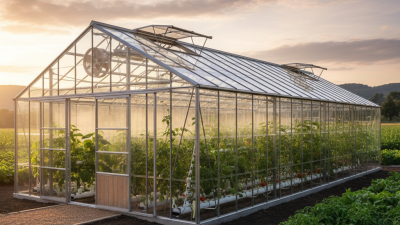
When comparing industrial greenhouse suppliers, technology fit matters more than catalogue size. In commercial projects, I examine the roof, growing system, and service plan together. Venlo glass structures provide high light transmission and precise ventilation. Their modular bays suit large farms and automated climate control. However, glass demands careful logistics, strong foundations, and regular cleaning. Poor shading choices can create hot pockets during summer. A supplier should provide local wind and snow calculations, not vague performance claims.

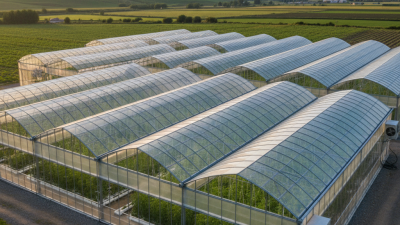
Polycarbonate systems offer impact resistance and better insulation than single glass in many climates. Twin-wall sheets trap air, reducing heat loss during cold nights. Multi-wall panels diffuse sunlight across leaves and reduce harsh glare. They can work well near hail-prone regions or remote sites. Yet panels may yellow, scratch, or lose seals without proper maintenance. Ask for tested light transmission, fire classification, replacement access, and warranty terms. Small details matter.

Hydroponic systems change the supplier conversation. Channels, slabs, reservoirs, pumps, and sensors must operate as one controlled loop. A reliable supplier explains nutrient dosing, filtration, drainage, and backup power. I prefer systems with readable alarms and manual override options. Fancy dashboards are not enough. Water quality can quietly damage roots. Suppliers should offer commissioning, operator training, and documented testing. I have seen promising installations struggle because staff training was treated as an afterthought. That weakness is easy to overlook. Global buyers should compare measured results, spare-part access, and regional support before signing.

7 Best Industrial Greenhouse Suppliers for Global Buyers? – Supplier Technologies: Venlo Glass, Polycarbonate, and Hydroponic Systems
Profile Recommended Application Primary Structure & Cover Typical Module Configuration Ventilation & Climate Control Hydroponic Compatibility Key Strength Important Buyer Check
Profile 01 Large-scale commercial vegetables, flowers, and year-round production Hot-dip galvanized steel frame with Venlo-style horticultural glass; commonly 4 mm glass panels Multi-span layout with repeated roof sections; standard bay widths commonly range from approximately 3.2 to 4.8 m Continuous roof vents, motorized screens, forced-air circulation, heating, and computer-based climate control Suitable for rockwool slabs, gutter systems, deep-water systems, and recirculating nutrient delivery High light transmission, long service life, and strong suitability for intensive production Verify snow, wind, seismic, drainage, and local building-load calculations
Profile 02 Commercial production in regions with hail, strong sunlight, or frequent temperature changes Galvanized steel frame with multi-wall polycarbonate panels, typically 6–10 mm thick Single-span or multi-span structures with modular widths commonly between 6 and 12 m Roof and side ventilation, shade curtains, evaporative cooling, circulation fans, and optional heating Well suited to NFT channels, grow bags, Dutch buckets, and containerized hydroponics Good balance of insulation, impact resistance, and installation flexibility Confirm panel UV protection, light diffusion, thermal performance, and replacement availability
Profile 03 Leafy greens, herbs, and fast-cycle crops near urban or peri-urban markets Galvanized steel or aluminum frame with polycarbonate or high-quality agricultural film Modular multi-bay system designed for high planting density and efficient internal circulation Automated roof vents, insect screens, horizontal airflow fans, dehumidification, and LED-compatible blackout systems Optimized for NFT, floating raft, deep-flow, and vertical hydroponic rack systems Efficient use of floor area and strong compatibility with automation Check sanitation zones, water filtration, nutrient dosing accuracy, and food-safety workflow
Profile 04 Tomatoes, cucumbers, peppers, and other high-wire vine crops High-clearance galvanized steel greenhouse with glass or reinforced multi-layer film High-gutter design, typically allowing approximately 4–8 m of internal crop-support clearance depending on configuration Roof ventilation, thermal screens, evaporative cooling, heating pipes, and supplemental carbon-dioxide management Designed for rockwool slabs, coco coir bags, Dutch buckets, and elevated recirculating gutters Supports intensive vertical cultivation and precise crop steering Confirm truss loads, crop-wire capacity, irrigation uniformity, and emergency drainage design
Profile 05 Cold-climate production requiring strong insulation and controlled heating demand Insulated polycarbonate or double-layer film structure with galvanized steel framing Compact multi-span or carefully engineered single-span modules with reinforced roof geometry Heating pipes or hot-air systems, thermal curtains, double doors, snow-management design, and humidity control Compatible with closed-loop drip irrigation, ebb-and-flow benches, and insulated hydroponic channels Reduced heat loss and improved protection against cold-weather stress Require project-specific snow-load calculations, insulation values, backup heating, and power redundancy
Profile 06 Arid, tropical, and high-solar environments with demanding cooling requirements Galvanized steel frame with diffused glass, polycarbonate, or reinforced agricultural film Wide-span or multi-span layout with high-volume air space and service corridors Roof vents, wet-pad evaporative cooling, shade screens, fogging, circulation fans, and automated weather sensors Suitable for drip hydroponics, Dutch buckets, NFT systems, and recirculating fertigation Strong environmental-control potential in hot and high-light climates Evaluate water quality, cooling-water consumption, corrosion protection, and generator capacity
Profile 07 Turnkey projects combining greenhouse construction, irrigation, automation, and crop-support systems Project-specific combination of Venlo glass, polycarbonate, or multi-layer film selected by climate and crop Custom multi-span configuration with integrated packing, nursery, technical, and storage areas Central climate computer, weather station, dosing unit, ventilation, heating, screens, cooling, and remote monitoring Supports NFT, drip fertigation, deep-water culture, ebb-and-flow, and closed-loop nutrient systems Single-project coordination and better integration between structural and cultivation equipment Confirm interface responsibilities, commissioning scope, spare parts, training, warranty, and local service coverage
Note: Specifications shown are common commercial greenhouse ranges and system configurations. Final dimensions, materials, loads, climate equipment, and hydroponic layouts should be engineered for the project site, crop plan, local regulations, and utility conditions.

Evaluation Metrics: Yield, Energy Use, Automation, Warranty, and Service

Choosing among the 7 best industrial greenhouse suppliers requires more than comparing construction prices. Yield should be measured per square meter across complete growing cycles, not from a single impressive harvest. Ask for climate records, crop data, and references from facilities with similar weather. A tomato house producing well in a cool region may perform differently under tropical heat.

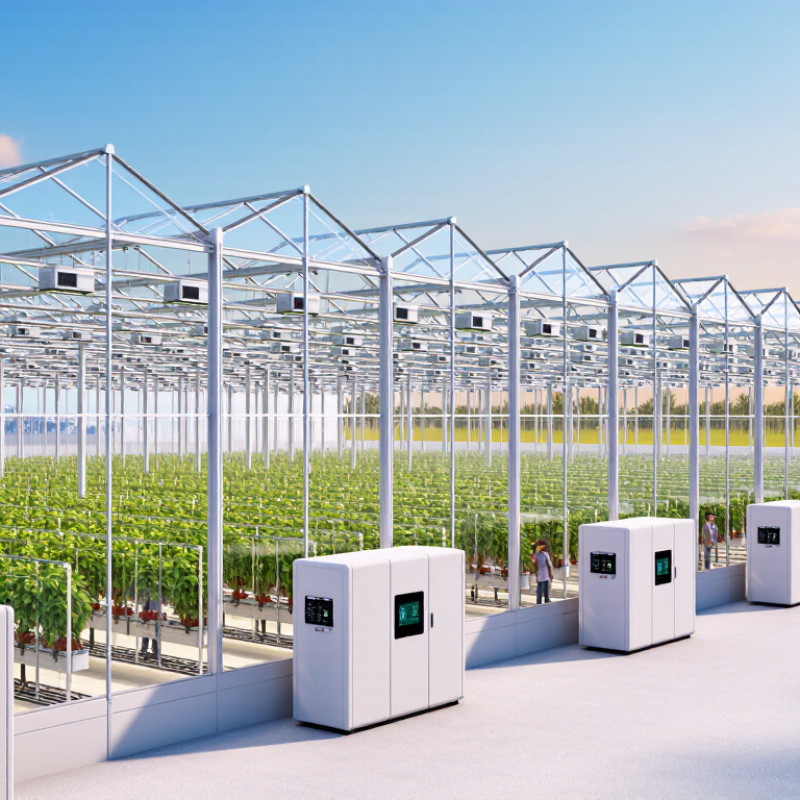
Energy use deserves close inspection. Request annual electricity and heating data, including lighting, ventilation, pumps, and cooling. Automation should control temperature, humidity, irrigation, and nutrient dosing with reliable sensors. Test the software interface during a live demonstration. If workers need paper notes to correct the system, the automation may be less practical than advertised. Small failures matter.

Warranty terms should name covered parts, response times, and labor responsibilities. Service quality is often visible in ordinary details, such as spare-parts storage and remote diagnostic support. Experienced buyers should ask how quickly a failed motor can be replaced during peak production. A supplier may offer excellent engineering but weak local support. That risk is easy to underestimate. Independent inspections, commissioning records, and operator training improve reliability. Still, no evaluation is perfect. Crop choices, staff habits, and changing energy prices can distort comparisons. Leave room for trial data before expanding the installation.

Industrial Greenhouse Supplier Evaluation Metrics

This normalized benchmark compares the practical importance and typical performance ranges used by global buyers. Higher scores indicate stronger performance; energy efficiency and service response are scored inversely because lower consumption and faster response are preferable.

Benchmark basis: commercial greenhouse yield of approximately 50–80 kg/m²/year, energy use of about 0.8–2.0 kWh/kg of produce, automation coverage of 60–95%, warranty periods of 2–5 years, and service response times of roughly 4–48 hours. Scores are normalized industry indicators rather than company-specific results.

Buyer Due Diligence: ROI Models, 20-Year Structures, and Compliance Checks

7 Best Industrial Greenhouse Suppliers for Global Buyers?

Buyer Due Diligence: ROI Models, 20-Year Structures, and Compliance Checks

Comparing seven industrial greenhouse suppliers requires more than reviewing prices and attractive project photos. Request a site-specific ROI model with crop cycles, energy use, labor, logistics, financing, maintenance, and expected downtime. Ask which assumptions come from measured projects. Numbers can deceive. Visit an operating greenhouse, inspect climate controls, and speak with previous buyers about service response and replacement parts. A polished proposal is not proof of dependable performance.

Evaluate the structure over twenty years, not only during installation. Check steel coating thickness, corrosion protection, wind and snow-load calculations, drainage design, foundation details, and component replacement plans. Ask whether glass, films, motors, sensors, and irrigation parts remain available after ten years. Obtain written warranty terms, exclusions, inspection duties, and technical support limits. I would also request a lifecycle cost model. It may expose a cheaper offer as expensive later.

Tips: Build a compliance checklist before negotiations. Confirm local permits, electrical and fire requirements, water discharge rules, worker-safety obligations, import documentation, and applicable product certifications. Have an independent engineer review drawings and load calculations. Keep every promise in the contract, including delivery milestones and performance testing. Some assumptions will be wrong. Review them quarterly and update the ROI model after commissioning, especially when energy prices, labor costs, or crop yields change.