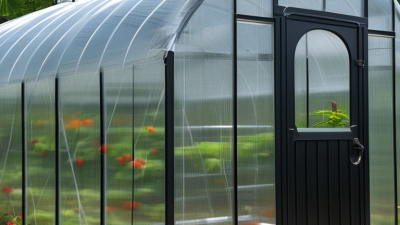
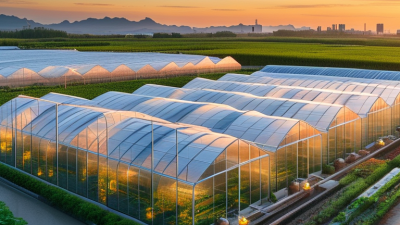
Plastic Film Greenhouse

Top Vegetable Greenhouse Manufacturers for Global Buyers

Choosing among the top Vegetable Greenhouse manufacturers requires more than comparing prices or viewing polished project photos. Global buyers need structures that perform under real conditions. Snow loads, strong winds, intense sunlight, humidity, and limited water can change a project completely. A greenhouse that succeeds in the Netherlands may struggle in Kenya, Canada, or the Middle East.

Dr. Gene Giacomelli, a respected controlled-environment agriculture researcher, offers a practical reminder: “A greenhouse is a tool, not a guarantee of production.” That sentence deserves attention. The best Vegetable Greenhouse manufacturer combines engineering with crop knowledge. Buyers should examine frame strength, covering materials, ventilation design, cooling systems, irrigation control, automation, and after-sales support. Factory certifications matter, but they do not replace technical testing or customer references.

Look closely at the details. Are replacement films available locally? Can workers clean the roof safely? Does the cooling system handle a hot afternoon at full crop load? These questions reveal more than a brochure.

Performance must be measurable.

This guide introduces manufacturers serving international markets and compares their capabilities, product ranges, customization options, and service networks. It also considers installation experience, energy efficiency, shipping practicality, and long-term maintenance. Some manufacturers may appear impressive but lack strong support after delivery. Others may offer simpler systems that perform reliably with fewer complications. That difference is easy to miss.

There is no universal winner. Climate, crop type, budget, labor skills, and local infrastructure shape the right decision. Buyers should verify every major claim. Even experienced teams can overlook drainage, spare parts, or training. Careful evaluation remains the safest investment.
Top Vegetable Greenhouse Manufacturers for Global Buyers

Vegetable Greenhouse Types and Global Output: FAOSTAT 2022 Baseline

Top Vegetable Greenhouse Manufacturers for Global Buyers

Vegetable Greenhouse Types and Global Output: FAOSTAT 2022 Baseline

FAOSTAT 2022 records global vegetable production at roughly 1.15 billion tonnes. China and India remain major contributors, supported by large open-field and protected-cultivation systems. However, FAOSTAT does not separate greenhouse output consistently across countries. That limitation matters.

Greenhouses still improve control over temperature, water, pests, and seasonal supply. Plastic-film tunnels suit cost-sensitive projects and moderate climates. Multi-span structures offer stronger airflow and better land use. Glasshouses support precise climate control, but their capital and energy demands are higher. Hydroponic systems can reduce water use, although their results depend on electricity, skills, and crop choice.

Industry reviews from the International Society for Horticultural Science report continued growth in protected cultivation, especially for tomatoes, cucumbers, peppers, and leafy vegetables.

Market reports also identify climate volatility and urban demand as key investment drivers. Yet their market estimates often use different definitions. Some count tunnels; others count only commercial high-tech facilities.

For global buyers, manufacturer evaluation should include wind-load design, corrosion protection, irrigation quality, replacement-part access, and local installation experience. A low purchase price may hide higher cooling costs. It may also create maintenance delays.

The data needs careful reading. FAOSTAT measures crops, not greenhouse efficiency. A reliable comparison should combine production figures with yield, water use, energy demand, and operating conditions. A greenhouse that performs well in a cool coastal region may fail in a hot, dry inland site.

Leading Manufacturers by Region: Capacity, Certifications, and Export Data

Regional capacity matters when selecting vegetable greenhouse manufacturers. European producers often lead in climate-control integration, automated ventilation, and glasshouse engineering. The Netherlands, Spain, and Italy remain important horticultural equipment hubs. Eurostat trade data shows strong European exports of prefabricated structures under HS 9406, although this code also includes non-greenhouse buildings. That limitation needs attention.

Asian manufacturers usually offer broader production capacity and competitive steel-frame pricing. China and Turkey report significant exports under HS 9406 in UN Comtrade data. However, export value alone does not prove technical quality. Buyers should request annual output in square meters, project references, and evidence of factory inspection.

North American manufacturers often focus on controlled-environment agriculture, where energy efficiency and automation matter more than basic structure volume.

Certifications reveal operational discipline. ISO 9001 supports quality management, while ISO 14001 indicates environmental controls. CE compliance may be relevant for equipment sold into European markets, but it does not certify the entire greenhouse. GlobalG.A.P. applies mainly to farm production, not manufacturing. USDA greenhouse reports also show that labor, energy, and water costs strongly influence commercial viability. Small details matter. A ten-minute maintenance delay can become a costly weekly problem.

Tips: Compare certified production capacity, not advertised capacity. Check whether export figures cover complete systems or only steel components. Ask for wind-load calculations, snow-load standards, coating thickness, spare-parts availability, and installation training. I would also verify recent projects directly; glossy case studies can hide weak after-sales support.

Technology Benchmark: Yield (kg/m²), Energy (kWh/m²), and Water Savings

Top Vegetable Greenhouse Manufacturers for Global Buyers

Yield, energy, and water use reveal more than polished greenhouse images. Wageningen University & Research benchmark studies place commercial tomato yields near 50–80 kg/m² annually. Results depend on light, cultivar, climate, and crop cycles. A higher number is not automatically better. Quality losses can hide behind impressive production figures.

Energy needs a stricter definition. Electricity-only consumption may range from 20–60 kWh/m² yearly, while heating can push total energy above 200 kWh/m² in cooler regions. These figures align with controlled-environment studies published in Horticulturae and European greenhouse energy assessments. Buyers should request separate electricity, heating, cooling, and lighting records. Otherwise, comparisons become unreliable.

Water performance is often stronger: FAO water-efficiency guidance and hydroponic research commonly report 60–90% lower water use than open-field irrigation. Closed-loop systems can approach the upper end, but leaks and poor filtration reduce savings quickly. Small details matter. Ask for daily meter readings, not marketing averages. The benchmark remains imperfect, because sunlight and climate change every site’s result.

Buyer Cost Model: CAPEX ($/m²), OPEX, ROI, and Payback Period

Top Vegetable Greenhouse Manufacturers for Global Buyers

Buyer Cost Model: CAPEX ($/m²), OPEX, ROI, and Payback Period

Comparing greenhouse manufacturers requires more than checking the quoted structure price. For vegetable projects, realistic CAPEX often ranges from $80 to $350 per m². Basic tunnels cost less. Automated glass or polycarbonate systems cost much more. Climate, irrigation, screens, heating, packing areas, and installation can change the budget sharply. Request a line-by-line quotation, including freight, commissioning, training, and spare parts.

Annual OPEX commonly falls between $15 and $70 per m². Energy is usually the largest variable. Labor, water, nutrients, crop protection, repairs, and software also matter. A useful model records local electricity prices and expected yields by season. Do not trust a perfect yield forecast. Real farms lose production during heat waves, equipment failures, or market gaps. That is where my own project reviews often find hidden costs.

Estimate annual operating profit by subtracting total OPEX from sales revenue. Then calculate ROI as annual profit divided by total CAPEX. Payback period equals CAPEX divided by annual profit. For example, a $180 per m² project earning $45 per m² annually shows a four-year payback. This result is only preliminary. Financing costs, land preparation, taxes, inflation, and crop-price volatility may extend it. Buyers should test conservative, expected, and difficult scenarios before selecting a supplier. A cheaper greenhouse is not always cheaper to operate. Sometimes, it is simply less complete.

Supplier Due Diligence: EN 13031, ISO 9001, IPM, and Food Safety

Top Vegetable Greenhouse Manufacturers for Global Buyers

Supplier due diligence should begin with evidence, not attractive project images. Ask manufacturers how their structures align with EN 13031, especially for load resistance, ventilation, foundations, and local climate risks. Requirements may differ by country, so an experienced engineer should review the design before purchase. Request structural calculations, material specifications, inspection records, and installation procedures.

ISO 9001 can reveal disciplined production controls, but it does not automatically guarantee safe vegetables. Check whether the supplier controls incoming steel, coatings, glass, fasteners, and replacement parts. Food safety also depends on water management, worker hygiene, crop contact materials, and traceability. Ask for batch records and corrective-action reports. A useful supplier should explain problems clearly, not hide them.

IPM should be practical, not decorative language in a brochure. Look for monitoring routines, pest thresholds, biological controls, approved treatment records, and staff training. Tips: Visit a working greenhouse if possible. Observe drainage, airflow, cleaning points, and harvest handling. Verify certificates directly with the issuing organization. Compare documents with the actual factory process. No checklist is perfect. I have learned that a neat audit file can still miss weak maintenance or unclear responsibility. Leave room for those uncomfortable questions.

Top Vegetable Greenhouse Manufacturers for Global Buyers

Supplier Due Diligence Reference: EN 13031, ISO 9001, IPM, and Food Safety

The chart compares the publication or latest revision year of widely used reference frameworks. EN 13031-1 addresses commercial greenhouse design and construction, ISO 9001:2015 covers quality management systems, FAO/WHO pesticide-management guidance supports integrated pest management, and Codex CXC 1-1969 Rev. 2022 provides internationally recognized food-hygiene principles. IPM guidance is not a single universal certification standard, so buyers should verify documented pest-control plans, pesticide records, biological-control practices, and food-safety procedures separately.