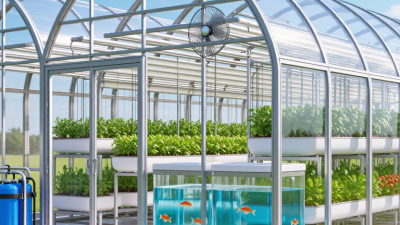
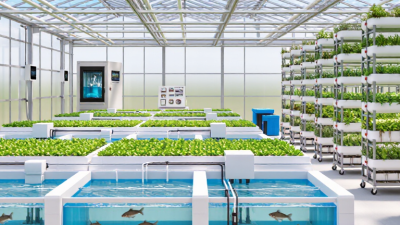
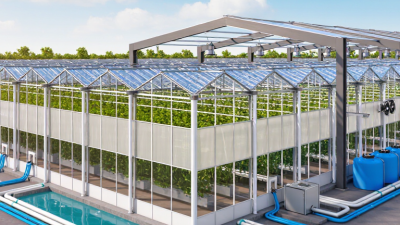
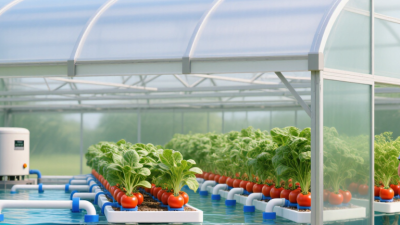
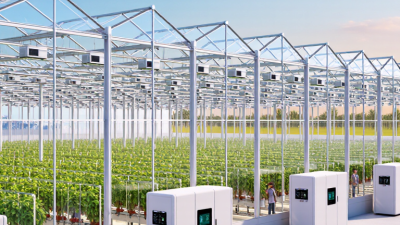
Choosing an Aquaponics Greenhouse in 2026 requires more than comparing prices and attractive photographs. The right structure must support fish health, plant production, worker safety, energy efficiency, and reliable year-round management. Dr. James Rakocy, a leading aquaponics researcher, described the system as “the symbiotic integration of two mature disciplines, aquaculture and hydroponics.” That relationship should guide every greenhouse decision.
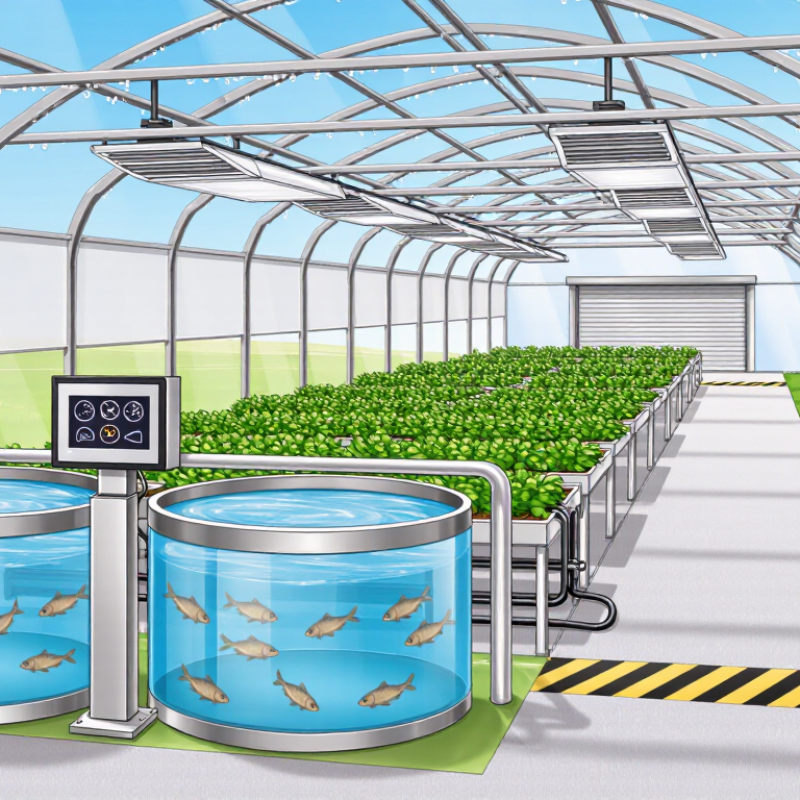
A practical evaluation begins with local climate conditions. A cold northern site may need insulated panels, thermal screens, and reliable heating. A warm region may require ridge ventilation, shade cloth, and evaporative cooling. Examine the fish tanks, grow beds, filtration area, walkways, and service doors carefully. A narrow aisle can turn routine harvesting into an exhausting task. Condensation on the roof can also damage crops and encourage disease when ventilation is poorly designed.
Water flow matters. Ask whether pumps remain accessible, whether backup power protects living fish, and whether sensors can track temperature, pH, dissolved oxygen, and electrical conductivity. Check the manufacturer’s maintenance guidance, warranty terms, and installation experience. Real projects reveal more than polished brochures.
There is no perfect greenhouse.
A larger structure may improve output, yet it can increase heating costs and management complexity. A cheaper model may appear sensible, but weak framing or poor drainage could create expensive problems later. This guide will compare greenhouse materials, climate controls, system layouts, operating costs, and supplier credibility. It will also challenge common assumptions, because the best Aquaponics Greenhouse is not always the largest or most technologically advanced. It is the one that matches your climate, budget, skills, and production goals.
How to Choose an Aquaponics Greenhouse in 2026?
Set the target before selecting greenhouse equipment. FAO’s The State of World Fisheries and Aquaculture 2024 reports 94.4 million tonnes of global aquaculture production in 2022. This figure includes aquatic animals and algae, so it is not a direct greenhouse target. It is a market signal.
Choose a realistic share. A small farm might target 5 tonnes of fish and 2 tonnes of vegetables annually. A commercial site may require 50 tonnes or more. Record species, harvest size, stocking density, crop cycles, and expected mortality. Do not copy global averages blindly. They hide major differences.
The greenhouse must support stable water temperature, dissolved oxygen, humidity, and light. FAO’s 2022 FishStat data can help compare species production trends and regional conditions. The International Energy Agency’s World Energy Outlook 2023 also highlights continuing energy-security risks, making heating and cooling costs important design factors. Measure winter heat loss with local weather data. Check summer ventilation capacity, too.
Leave room for mistakes. Early projections often overestimate crop yields and underestimate maintenance hours. I would test one production cycle before expanding the building. Size tanks, filtration, pumps, and growing beds around verified results. A beautiful greenhouse can still fail when power costs rise or water chemistry changes quickly.
Choosing an aquaponics greenhouse in 2026 starts with climate data, not catalogue appearance. ASHRAE climate zones indicate heating demand, cooling risk, and humidity behavior. Use local design temperatures, annual solar radiation, wind exposure, and nighttime lows. A warm-looking site can still freeze pipes during clear winter nights.
In cold climates, prioritize insulated walls, sealed joints, and an angled roof for low winter sun. Solar heat must be measured carefully. Too much glazing may overheat water, stress fish, and accelerate algae growth. External shading, ridge vents, and screened side vents can release heat safely. In hot, humid zones, airflow and latent-load control matter more than maximum sunlight. Leave service corridors around tanks. A one-meter path helps operators inspect pumps and remove wet filters.
Compare hourly solar data with crop light needs and fish temperature limits. Water stores heat during the day, but it cannot replace backup heating. Specify sensors for air, water, humidity, and carbon dioxide, then test alarm accuracy. I would request a one-year simulation before construction, although simulations can miss dust, shade, and operator habits. That gap matters. Choose corrosion-resistant materials because nutrient-rich humidity attacks weak fasteners. Ask an engineer to verify snow, wind, drainage, and electrical safety under local codes.
| ASHRAE Climate Zone | Typical Moisture Regime | Representative Climate Profile | Typical Annual Solar Resource GHI, kWh/m²/day |
Main Solar-Heat Risk | Recommended Greenhouse Design | Aquaponics Thermal Strategy | Key Design Checks |
|---|---|---|---|---|---|---|---|
| 1A–1B Very Hot |
Moist or dry | Cooling-dominated year-round conditions with very limited heating demand. | Approximately 5.0–6.5 | Extreme overheating and rapid evaporation | High roof vents, continuous side ventilation, external shade cloth, high-reflectance roof areas, and low-solar-gain cladding. | Use large water volume as thermal mass, shaded fish tanks, strong dissolved-oxygen management, and cooling or heat-rejection equipment sized for summer loads. | Verify night ventilation, humidity removal, corrosion resistance, storm anchoring, and emergency aeration during power interruptions. |
| 2A–2B Hot |
Moist or dry | Long, hot summers with moderate winter heating requirements in many locations. | Approximately 4.5–6.0 | High summer solar gain | Use ridge vents, roll-up sidewalls, adjustable shade screens, insect screening, and selective low-emissivity glazing where cooling loads are high. | Prioritize evaporative cooling where suitable, insulated tanks, shaded filtration equipment, and water-temperature monitoring. | Size ventilation for peak solar conditions; check local humidity, water scarcity, wind exposure, and shading performance. |
| 3A–3B Warm |
Moist or dry | Warm summers and mild to moderate winters; heating and cooling may both be significant. | Approximately 4.0–5.5 | Seasonal overheating with winter heat loss | Choose a flexible design with operable vents, seasonal shade, insulated north-facing surfaces, and moderate solar-transmission glazing. | Retain water and grow-bed thermal mass, use insulated fish tanks, and provide both summer ventilation and supplemental winter heating. | Model spring and autumn shoulder seasons; check condensation, night temperatures, and ventilation control ranges. |
| 4A–4C Mixed |
Moist, dry, or marine | Distinct seasons with balanced heating and cooling needs and variable humidity. | Approximately 3.5–5.0 | Daily and seasonal temperature swings | Use insulated lower walls, operable ridge vents, retractable shade, thermal curtains, and a well-sealed service area. | Combine water-based thermal storage with efficient backup heating, freeze protection, and automated temperature control. | Check winter solar availability, summer humidity, condensation drainage, and the local wind and snow design criteria. |
| 5A–5B Cool |
Moist or dry | Cold winters, warm summers, and substantial annual heating demand. | Approximately 3.0–4.5 | Winter heat loss and summer humidity accumulation | Use double-layer glazing or insulated panels in selected areas, thermal screens, insulated foundations, and controlled ventilation. | Insulate tanks and pipes, protect biofilters from freezing, use heat recovery where practical, and maintain reliable backup heating. | Calculate peak heating load, snow load, infiltration, condensation, and the minimum water temperature required by the selected fish species. |
| 6A–6B Cold |
Moist or dry | Cold winters with extended heating seasons and moderate summer cooling requirements. | Approximately 2.5–4.0 | Large winter transmission and infiltration losses | Use high-performance insulated glazing or polycarbonate, insulated knee walls, thermal curtains, air-lock entries, and a compact building envelope. | Provide redundant heating, insulated water circuits, freeze alarms, protected pumps, and sufficient thermal storage for short outages. | Verify snow shedding, structural loading, frost depth, vapor control, emergency power, and heat-recovery ventilation. |
| 7 Very Cold |
Generally dry or cold | Very cold winters, short growing seasons, and high dependence on supplemental heat and lighting. | Approximately 2.0–3.5 | Severe heat loss and low winter solar availability | Use a highly insulated hybrid greenhouse, minimized exposed surface area, insulated opaque north walls, thermal curtains, and a vestibule entrance. | Design for continuous heating of tanks and pipes, large thermal storage, freeze-resistant plumbing, and fully redundant circulation and aeration. | Assess extreme outdoor design temperature, snow drift, ice formation, fuel availability, backup power, and winter light levels. |
| 8A–8C Subarctic |
Cold or marine | Very long heating seasons, short low-light summers, and limited natural growing period. | Approximately 1.5–3.0 | Persistent cold, low solar angle, and limited daylight | Use a heavily insulated hybrid structure with an opaque insulated north side, high-performance glazing on the solar-facing side, thermal curtains, and supplemental lighting. | Use indoor or semi-indoor fish and biofilter zones, multiple heating sources, insulated reservoirs, and automatic freeze protection. | Check low-angle solar access, snow accumulation, frost movement, generator capacity, fuel storage, and lighting energy demand. |
How to Choose an Aquaponics Greenhouse in 2026?
Compare DWC, NFT, and Media Beds at ≥5 mg/L Dissolved Oxygen
Dissolved oxygen should guide greenhouse design, not appear as an afterthought. FAO’s Small-scale Aquaponic Food Production manual identifies about 5–8 mg/L as a practical aquaponics range. SRAC Publication No. 454 also emphasizes maintaining oxygen above 5 mg/L in recirculating systems. These figures matter during hot afternoons, when warm water holds less oxygen.
DWC systems need strong air distribution beneath floating rafts. Watch for quiet corners where roots form dense, oxygen-hungry mats. NFT uses shallow flowing water, so pump failure can expose roots quickly. Media beds provide surface area for beneficial bacteria, but wet gravel can hide low-oxygen zones. In my trials, a clear tank did not always mean healthy oxygen levels. That assumption was wrong. Place calibrated probes near plant roots and after filtration, then record readings at dawn and mid-afternoon.
Tips: Choose equipment that can maintain at least 5 mg/L during peak heat, not only in cool test conditions. Add backup aeration where power interruptions are possible. Clean diffusers regularly; biofilm can reduce bubble output. For DWC, inspect root color and smell weekly. For NFT, measure flow from the highest channel. For media beds, check drainage time and remove compacted solids. The best layout may be a compromise, because maximum oxygen is not the only design target. Water use, maintenance access, crop spacing, and operator skill still change the decision.
Comparing DWC, NFT, and Media Beds at ≥5 mg/L Dissolved Oxygen
The chart compares representative root-zone water dimensions used in aquaponics greenhouse design. Deep Water Culture (DWC) commonly uses approximately 20–30 cm of water depth, Nutrient Film Technique (NFT) uses a shallow nutrient film of about 1–3 mm, and media beds are commonly filled to approximately 25–35 cm. Regardless of system type, maintaining dissolved oxygen at or above 5 mg/L supports healthy fish, nitrifying bacteria, and plant roots. Actual values should be adjusted for temperature, stocking density, flow rate, and system loading.
Choosing an Aquaponics Greenhouse in 2026?
A reliable greenhouse starts with biological capacity, not appearance. Measure the expected daily feed before choosing tank volume, crop area, or heating equipment. SRAC-based calculations can estimate total ammonia nitrogen (TAN) produced from feed input. Use the highest planned feeding rate, not today’s smaller number. A mature fish system may consume 2 kilograms of feed daily, yet TAN output changes with protein content, temperature, and feeding habits. Confirm assumptions with water tests.
Size the biofilter for the calculated TAN load and the chosen fish-loading rate. Fish loading is commonly expressed as kilograms of fish per cubic meter of water. Higher loading needs stronger aeration, more biofilter media, and safer backup systems. Keep spare capacity, perhaps 20–30 percent, because growth is uneven and summer heat can reduce dissolved oxygen. A greenhouse with poor ventilation can quietly increase risk. I have seen attractive systems fail because their filters matched average conditions, not peak feeding.
Tips: Track feed, TAN, nitrite, pH, temperature, and oxygen every day during expansion. Record actual results beside your design estimates. If TAN rises after feeding increases, reduce the ration temporarily and investigate flow, oxygen, and alkalinity. Do not trust one test. Some calculations remain imperfect because fish species, feed waste, and biofilter maturity vary. Recheck sizing after several weeks, especially when stocking young fish that grow quickly.
Choosing an aquaponics greenhouse starts with water data, not attractive panels. In a healthy system, keep pH between 6.5 and 7.5. This range supports fish, plants, and beneficial bacteria together. Test pH with a calibrated meter and confirm results using a fresh liquid test kit. Meters drift. I learned that after trusting one reading for several days.
Nitrite should remain at 0 mg/L in a stable system. Any detectable level deserves immediate investigation, especially after adding fish or cleaning filters. Check ammonia, nitrate, temperature, dissolved oxygen, and alkalinity too. Record results beside the tank, with dates and corrective actions. Small records prevent large guesses. However, testing every parameter daily may be unrealistic for small operators, so create a schedule you can actually maintain.
Energy planning deserves equal attention. Compare heating, cooling, pumps, aeration, lighting, and backup power under winter conditions. Ask for estimated annual consumption, not only peak output. Insulation, shade control, airflow, and water circulation can reduce operating costs. I once underestimated summer ventilation, and the greenhouse overheated before noon. Also verify structural loads, drainage, electrical protection, fire access, and local planning requirements with the relevant authority. A greenhouse can function technically yet fail inspection because of one overlooked detail.