Choosing the best Aquaponics Greenhouse in 2026 requires more than comparing prices or attractive product photos. Climate patterns, fish welfare, crop goals, energy costs, and available space all affect the final decision. A greenhouse that performs well in Arizona may struggle in northern Europe. Local conditions matter.
This guide examines practical features, including insulation, ventilation, shading, water circulation, filtration, automation, and structural durability. It also considers supplier transparency, maintenance access, warranty terms, and compliance with local building and aquaculture requirements. These details often determine whether a system remains productive after its first season.
Real-world experience suggests that simple designs can outperform complicated systems when operators lack technical support. However, “simple” does not mean poorly engineered. Reliable pumps, backup power, accurate sensors, and easy-to-clean tanks can protect both crops and fish. Small failures become expensive quickly.
No greenhouse is perfect.
The recommendations in this article draw on established aquaponics principles, manufacturer specifications, grower experience, and guidance from agricultural extension services. Still, product claims should be verified independently. Marketing language can hide energy consumption, replacement costs, or difficult installation requirements. I also recognize that budget limits may force compromises, especially for beginners. The best choice is not always the largest or most automated model. It is the system that matches your climate, skills, production targets, and long-term support options.
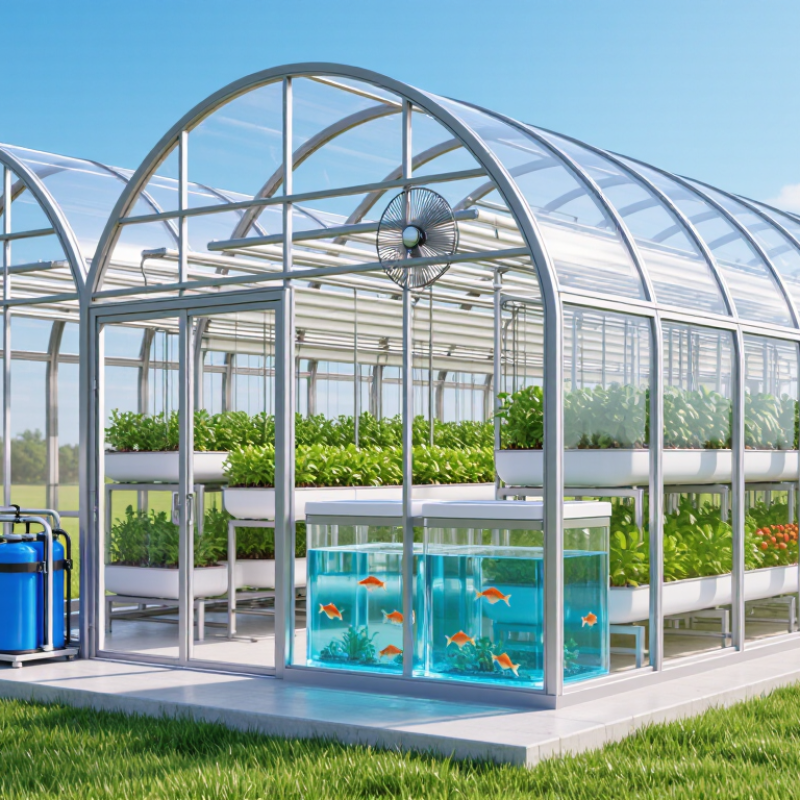
Choosing an aquaponics greenhouse in 2026 starts with biology, not glazing. An aquaponics greenhouse links fish tanks, biofilters, pumps, grow beds, and climate controls. Fish waste becomes plant nutrients through microbial conversion. Plants help clean recirculated water. The State of World Fisheries and Aquaculture 2024 reported 130.9 million tonnes of aquatic animals from aquaculture in 2022. Aquaculture supplied 51% of global aquatic animal production. That scale matters. However, a small greenhouse still needs precise control. Do not copy industrial layouts blindly.
Size the greenhouse around daily feed, fish biomass, crop demand, and local weather. Prioritize insulated panels, roof ventilation, shading, drainage, and backup power. A reliable system monitors temperature, pH, dissolved oxygen, ammonia, nitrite, humidity, and water flow. The International Energy Agency reports that buildings used about 30% of global final energy in 2022. Heating and cooling can therefore challenge greenhouse economics. In practice, undersized ventilation causes stress quickly. Oversized equipment wastes money and space. The perfect design is rarely perfect.
Tips: Request a water-flow schematic before purchase. Check whether pumps remain accessible for cleaning. Place dissolved oxygen sensors near fish tanks, not only in grow beds. Keep a written testing schedule. Even experienced operators can overlook morning temperature swings. Trial the system with limited stocking first. Record plant growth, energy use, water loss, and fish behavior before expanding.
How to Choose the Best Aquaponics Greenhouse in 2026?
Climate should guide the greenhouse design, not merely the crop list. Measure daytime heat, winter lows, humidity, wind, and annual rainfall at the proposed site. A hot location may need roof vents, shade cloth, and strong airflow. Cold regions require insulation, thermal screens, and reliable heating protection. Aquaponics adds moisture, so poor ventilation can encourage algae, condensation, and plant disease. A small data logger can reveal temperature swings that a single weather report misses.
Space planning affects daily work and system stability. Leave clear paths around fish tanks, grow beds, filters, and electrical equipment. Keep tanks away from direct summer sunlight, which can rapidly warm the water. Check whether the floor can support heavy tanks when filled. It is easy to underestimate this load. I once planned a compact layout that looked efficient on paper, but maintenance became awkward around the pump area.
Site conditions deserve equal attention. Choose level ground with dependable drainage, clean water access, and safe electrical service. Avoid low points where rainwater collects near the foundation. Observe the sun during different seasons, because nearby trees can create winter shade. Strong winds may require deeper anchoring and reinforced frames. Confirm local construction, water, and electrical requirements before installation. Soil testing can also prevent expensive leveling or foundation changes later. An attractive greenhouse is not automatically a workable one.
An aquaponics greenhouse must protect fish, plants, and water temperature at the same time. The best structure depends on wind, snow, sunlight, and electricity access. Before buying, measure winter night temperatures at the proposed site. Real data beats a glossy specification sheet. Curved hoops shed snow well, while rigid frames support vents and shade systems more securely. High roofs improve air movement, but they also increase the volume that needs heating.
Frame material affects service life in a humid aquaponics environment. Galvanized steel offers strong support and usually handles heavy loads well. However, damaged coatings can rust near wet walkways. Aluminum resists corrosion and stays light, yet it may need stronger joints in windy areas. Glass provides excellent light transmission, but it breaks more easily and loses heat quickly without suitable layers. Twin-wall polycarbonate reduces heat loss and softens harsh sunlight. Flexible film costs less, although it can tear, loosen, and require frequent replacement.
Insulation should protect both the growing area and the water tanks. Use sealed panels around service rooms, tank enclosures, and lower wall sections. Thermal screens can reduce nighttime heat loss, but they must not block ventilation. Condensation is easy to underestimate. It can drip onto leaves, metal joints, and electrical equipment. I once focused too heavily on insulation and overlooked airflow. The result was warmer nights but heavier moisture. A dependable design balances insulation, ventilation, drainage, and accessible maintenance. Small test sections can reveal problems before full construction.
| Greenhouse Structure | Typical Frame Material | Common Glazing Material | Insulation Characteristics | Light Transmission | Snow and Wind Performance | Approximate Service Life | Aquaponics Suitability | Main Advantages | Main Limitations |
|---|---|---|---|---|---|---|---|---|---|
| Single-span hoop house | Galvanized steel tubing | Single-layer polyethylene film, usually 150–200 microns thick | Low insulation; a single air layer provides limited thermal resistance. Double-layer inflated film improves heat retention. | High when the film is clean and new; commonly about 80–90% for clear single-layer film. | Moderate with suitable anchoring and frequent snow removal; performance depends heavily on tube diameter, spacing, and foundation design. | Frame: commonly 15–30 years with corrosion protection. Film: commonly 3–5 years, depending on ultraviolet exposure and weather. | Good for mild climates and seasonal production | Low initial cost, fast installation, flexible sizing, and easy ventilation. | Limited winter heat retention, shorter covering life, and lower resistance to heavy snow loads than rigid structures. |
| Multi-span gutter-connected greenhouse | Galvanized steel, aluminum, or a combination of steel columns and aluminum glazing bars | Double-layer polyethylene film, twin-wall polycarbonate, or glass | Better than a single-span house because shared walls reduce exposed surface area. Thermal screens and double coverings can further reduce heat loss. | Typically high, although roof trusses and gutters create more shading than a single-span design. | Good to very good when engineered for the local snow and wind zone; roof geometry and drainage design are important. | Frame: commonly 20–40 years. Covering: approximately 3–10 years for film or 10–20 years for rigid panels, depending on material and maintenance. | Very good for medium and large aquaponics operations | Efficient land use, shared walls, centralized climate control, and lower heat loss per growing area. | Higher construction cost, more complex drainage, and greater risk of humidity buildup if ventilation is inadequate. |
| Gothic-arch greenhouse | Galvanized steel tubing or structural steel | Polyethylene film or twin-wall polycarbonate | Similar to a hoop house with the same covering, but the steeper roof helps snow slide off and reduces snow accumulation. | High with clear film or transparent polycarbonate; curved surfaces can slightly reduce light uniformity. | Good in snowy regions when properly anchored; the pointed roof generally sheds snow more effectively than a semicircular roof. | Frame: commonly 15–30 years. Film: approximately 3–5 years; polycarbonate panels often last 10–20 years. | Good for cold climates requiring a cost-conscious structure | Improved snow shedding, relatively simple construction, and good interior height for trellised crops. | Insulation remains limited unless a double covering or rigid panels are used. |
| Rigid-wall greenhouse | Aluminum, galvanized steel, or engineered timber | Twin-wall or multi-wall polycarbonate panels | Good insulation from trapped air cells. A 6–10 mm multi-wall panel generally insulates better than single glazing. | Moderate to high; typically lower than clear single glazing because internal ribs diffuse and reduce direct transmission. | Good when panels are correctly fastened and the frame is designed for local loads. | Frame: commonly 20–40 years. Polycarbonate: often 10–20 years, depending on ultraviolet protection, cleaning, and temperature exposure. | Excellent for year-round aquaponics in variable climates | Balanced insulation, durability, impact resistance, diffused light, and lower maintenance than film. | Higher material cost and gradual panel aging or discoloration if ultraviolet protection is inadequate. |
| Double-glazed glass greenhouse | Aluminum or galvanized steel | Double-pane horticultural or tempered glass | Good insulation compared with single glass, although thermal bridges through frames and seals must be controlled. | High and stable over time when the glass remains clean; direct light levels are generally strong. | Very good when designed with tempered or laminated glass and appropriate structural support. | Frame: commonly 30–50 years or more. Glass can last for decades, while seals and hardware may require replacement. | Excellent for permanent facilities with a high investment budget | Long service life, strong light transmission, scratch resistance, and a permanent appearance. | High capital cost, heavy structural requirements, breakage risk, and more difficult replacement work. |
| Insulated solar greenhouse | Wood, galvanized steel, or a hybrid frame with insulated opaque walls | South-facing glass or polycarbonate with insulated north, east, and west walls | Potentially very good because opaque walls can use rigid foam, mineral wool, or insulated panels; thermal mass such as water tanks can moderate temperature swings. | Lower total daylight than fully glazed designs, but sunlight can be concentrated on the primary growing side. | Good when the opaque walls and roof are structurally engineered for local loads; orientation is critical. | Highly variable; commonly 20–40 years for a well-maintained structure, with covering and seal replacement as needed. | Very good for cold climates and energy-conscious production | Reduced heating demand, improved nighttime temperature stability, and compatibility with passive solar strategies. | Requires careful orientation, shading control, humidity management, and detailed thermal design. |
| Geodesic or dome greenhouse | Aluminum, galvanized steel, or engineered composite members | Polycarbonate panels or specialized greenhouse film | Can perform well with multi-layer panels, but joints and complex connections must be sealed carefully to prevent air leakage. | Good overall exposure, although reflections and frame members can create uneven light distribution. | Good aerodynamic performance in wind when properly anchored; snow behavior depends on the curvature, panel layout, and local climate. | Frame: commonly 20–40 years. Covering: approximately 5–20 years depending on film or panel selection. | Suitable for specialized or small-scale aquaponics projects | Efficient shape, strong wind resistance potential, and distinctive interior geometry. | Complex construction, difficult equipment layout, irregular usable space, and more challenging ventilation design. |
| Data are typical planning ranges rather than guaranteed specifications. Actual performance depends on local snow and wind loads, foundation quality, glazing thickness, frame spacing, ventilation, shading, humidity control, and maintenance. For aquaponics, prioritize corrosion-resistant materials, washable interior surfaces, reliable ventilation, and insulation that limits condensation without preventing necessary air exchange. | |||||||||
How to Choose the Best Aquaponics Greenhouse in 2026?
Selecting aquaponics technology starts with water stability, not attractive equipment. Choose tanks, grow beds, biofilters, and pumps that match your climate and maintenance skills. Monitor pH, temperature, dissolved oxygen, and ammonia every day during the first production cycle. Small digital sensors help, but manual testing remains important when readings seem unusual.
Capacity should grow in stages. A compact greenhouse may support learning with lower feed demand and simpler water circulation. Larger systems need stronger filtration, backup aeration, shaded areas, and reliable drainage. Calculate fish biomass, plant area, daily water movement, and harvest targets before buying equipment. Leave service space around tanks. Crowded systems become difficult to clean and inspect.
Automation should reduce risk, not remove responsibility. Useful controls can adjust ventilation, record water data, trigger low-oxygen alerts, and protect pumps from dry running. Add backup power for essential aeration. Keep manual valves and written procedures available. My first capacity estimate would have been too optimistic without measuring seasonal heat gain. That mistake matters. Sensors can also drift, especially in humid greenhouses. Check them against reference tests regularly, and review alarm settings after real operating conditions appear.
Compare common aquaponics technologies using practical planning indicators for water efficiency, crop flexibility, and automation readiness. Higher scores indicate a stronger fit for a commercial greenhouse with consistent monitoring and control.
Planning index: 100 represents the strongest relative performance among the compared technologies. Media bed systems are flexible for mixed crops, deep water culture supports efficient commercial production, and nutrient film technique offers strong automation potential when water quality and flow are carefully controlled.
Choosing the best aquaponics greenhouse in 2026 requires more than comparing frame prices. Evaluate maintenance, sustainability, and long-term value together. FAO’s State of World Fisheries and Aquaculture 2024 reports that aquaculture supplied 51% of aquatic animal production in 2022. That growth supports resilient food systems, but it does not guarantee a profitable greenhouse. Record water temperature, dissolved oxygen, pH, and electricity for one full season. Real logs matter.
Cost analysis should include glazing replacement, pump failure, labor, filtration media, fish feed, seedlings, heating, and insurance. Separate upfront capital from monthly operating expenses. The IEA’s Energy Efficiency 2023 report states that buildings use about 30% of global final energy. Greenhouse heating is not identical, but the warning remains useful. Compare insulation, thermal screens, ventilation, and local energy tariffs before choosing equipment. A cheaper structure may require constant heating.
Sustainability should be measured, not advertised. Track kilowatt-hours per kilogram of produce, liters of makeup water, fish survival, and nutrient discharge. Choose accessible pumps, standard filters, washable surfaces, and safe drainage. Complex automation can impress visitors but frustrate operators during sensor failures. Do not ignore repair access.
One honest weakness remains: forecasts rarely price downtime, learning mistakes, or crop losses. Leave contingency funds.