China Best Aquaponics System Manufacturer and Supplier
Choosing the right China aquaponics system manufacturer and supplier requires more than comparing prices. It requires practical experience, engineering discipline, and dependable communication. A professional supplier should understand fish health, plant growth, water circulation, filtration, and climate control. These elements must work together every day.
The Aquaponics System should fit the farm, not force the farm into a fixed design. Reliable manufacturers can provide indoor units, greenhouse systems, commercial installations, and educational models. They should explain tank volume, grow-bed capacity, pump performance, filtration needs, and expected maintenance. Clear drawings help customers inspect every pipe, valve, sensor, and connection before production begins. Details matter.
Experienced suppliers usually combine material selection with controlled manufacturing. Food-safe tanks, corrosion-resistant frames, stable pumps, and washable filters support safer operation. Quality checks should cover leaks, electrical components, water flow, packaging, and installation guidance. Technical documents, replacement parts, and responsive after-sales support also influence long-term value. A strong supplier does not simply promise high output. It provides evidence, test records, realistic capacity estimates, and usable advice.
No system is perfect. Seasonal temperatures, fish behavior, water chemistry, and operator habits can change results. Some designs may need adjustment after installation. That honest point deserves attention. The best partnership allows testing, feedback, and improvement instead of hiding practical limitations. For buyers seeking a trusted Chinese manufacturer, transparent communication and documented experience offer a safer path toward efficient aquaponics production. The goal is not impressive equipment alone. It is a stable, manageable, and productive system built for real working conditions.
Aquaponics Market Overview: Systems, Standards, and 90% Water Savings
China Best Aquaponics System Manufacturer and Supplier
Aquaponics Market Overview: Systems, Standards, and 90% Water Savings
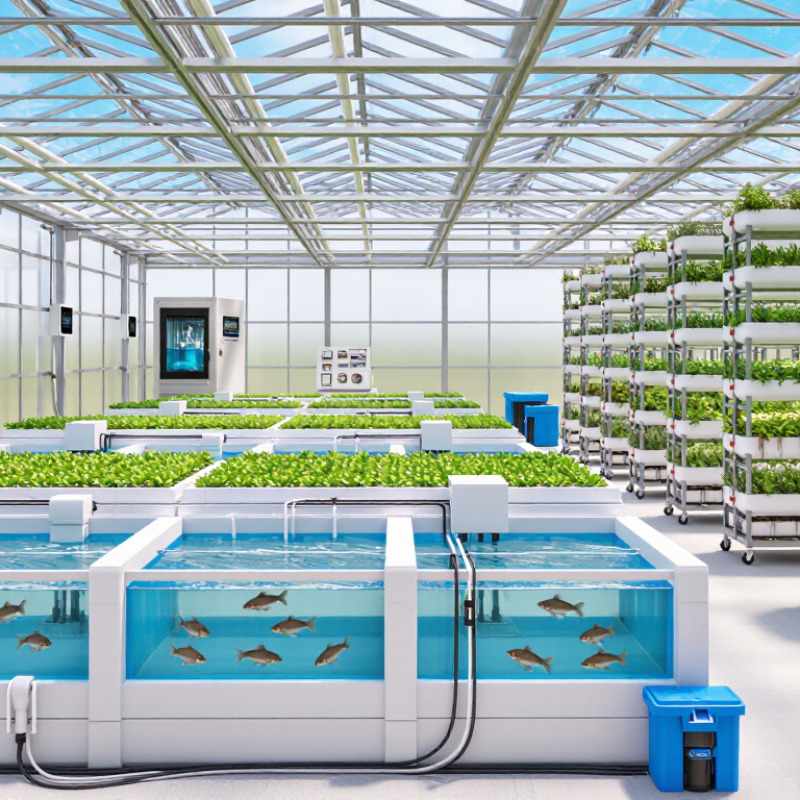
Aquaponics combines fish culture, biofiltration, and soilless plant production in one recirculating loop. FAO’s SOFIA 2024 report recorded 130.9 million tonnes of aquatic animals from aquaculture in 2022. That growth increases interest in efficient production systems. Well-designed aquaponics units can reduce water consumption by up to 90% compared with conventional soil farming, according to peer-reviewed system studies. However, the figure depends on climate, crop choice, leakage control, and operating discipline. It is not a universal guarantee.
A reliable system needs measured oxygen, pH, ammonia, nitrite, temperature, and flow. Food-contact materials should be suitable for the intended use. Operators should also follow local plumbing, electrical, building, and food-safety requirements. HACCP-based procedures can help control harvest risks, although certification rules differ between regions. In practical installations, a blocked biofilter can quickly stress fish. Small errors become expensive.
Tips: Install backup aeration before stocking fish. Record water readings daily. Keep separate tools for cleaning and harvest areas. Design for maintenance access, not appearance alone. A compact greenhouse may save space, yet poor airflow can increase disease pressure. The 90% water-saving claim also needs reflection: evaporation, sludge removal, and plant transpiration still require replacement water. Start with a pilot unit and verify savings through actual meter readings.
China’s Manufacturing Capacity: Certifications, Materials, and Quality Control
China’s aquaponics manufacturing capacity covers tanks, grow beds, filtration units, pumps, and greenhouse structures.
Reliable suppliers support their claims with current certifications, factory records, and traceable production documents. Common standards include ISO 9001 for quality management and material certifications for food-contact applications. Buyers should verify certificate numbers, issuing bodies, and expiry dates.
A certificate alone proves little.
Material selection directly affects system safety and service life.
Food-grade HDPE tanks resist moisture, impact, and many cleaning chemicals. 304 stainless steel suits frames, fittings, and areas exposed to constant water. UV-resistant PVC helps protect pipes installed under strong sunlight. Each weld should appear even, without pinholes or rough edges.
Small details matter.
Quality control should continue from incoming materials to final assembly.
Technicians can check tank dimensions, pump flow, electrical insulation, and connection strength. Leak testing under operating pressure can reveal weak joints before shipment. Factory teams should record batch numbers and inspection results for future support. The process is not always perfect. A rushed inspection may miss a minor fitting defect. Honest suppliers review such failures, improve procedures, and welcome third-party inspections. Clear packaging, installation drawings, and replacement-part records also show practical manufacturing experience.
System Design Fundamentals: Fish Density, Biofiltration, and 1:1 Grow Beds
A reliable aquaponics system begins with balanced fish density, not maximum stocking. A practical starting point is 10–20 kilograms of mature fish per 1,000 liters of water. This range depends on species, feeding rates, oxygen levels, and temperature. Fingerlings produce little waste, but their growth changes the load quickly. Plan for adult fish.
Measure daily. That matters.
Biofiltration must process the waste created by feed, not simply match tank size. Nitrifying bacteria need strong water movement, oxygen, and stable surfaces. Media filters, moving beds, and settling chambers can work well when sized correctly. Test ammonia and nitrite during cycling, then check nitrate, pH, and dissolved oxygen regularly. A clear tank can still hide unstable chemistry. That mistake is common.
The 1:1 grow-bed ratio offers a useful design reference: one volume of fish tank water to one volume of media grow beds. However, it is not a universal formula. High feeding rates may require more filtration and plant capacity. Light-feeding systems may need less. For example, a 1,000-liter fish tank paired with 1,000 liters of media beds gives a reasonable starting layout. Keep return pipes accessible, and leave space around the beds for inspection. In practice, designers often underestimate plumbing losses and seasonal heat. I would rather begin conservatively, record water tests, and expand stocking only after the system proves stable.
Cost and Performance Metrics: Yield, Energy Use, and Return on Investment
For a China-based aquaponics system manufacturer or supplier, performance begins with measurable assumptions. A 2022 review in Aquacultural Engineering reported that energy demand varies widely with climate, pumping height, aeration, and lighting. Commercial systems commonly require about 0.8–2.5 kWh per kilogram of combined output, excluding intensive LED production. Small design changes matter.
The University of the Virgin Islands’ long-running aquaponics research reported annual production near 5,000 kilograms of tilapia and 1,000 kilograms of vegetables from a commercial-scale model. However, that result depends on skilled management, warm conditions, and reliable markets. It should not become a universal promise. The FAO’s 2024 aquaculture report also confirms aquaculture’s major role in global food supply, but it does not guarantee profitability for every farm.
Use yield per square meter, feed conversion, water replacement, and kilowatt-hours per kilogram when comparing suppliers. For example, a system producing 10,000 kilograms annually, with a net margin of 2.50 dollars per kilogram, creates 25,000 dollars before fixed costs. If installation costs 100,000 dollars, simple payback appears to be four years. That estimate ignores labor, financing, repairs, crop losses, and seasonal price changes. Reality is less tidy. A credible supplier should provide logged energy data, twelve-month production records, maintenance schedules, and sensitivity analysis. Without those documents, return on investment remains an attractive spreadsheet rather than a dependable operating result.
China Best Aquaponics System Manufacturer and Supplier - Cost and Performance Metrics: Yield, Energy Use, and Return on Investment
| System Configuration |
Typical Application |
Installed Cost
(USD/m²) |
Annual Leafy-Green Yield
(kg/m²) |
Fish Yield
(kg/m²/year) |
Electricity Use
(kWh/kg Total Output) |
Annual Operating Cost
(USD/m²) |
Estimated Payback
(Years) |
Indicative Annual ROI |
| Media Bed |
Small farms, education, diversified production |
180–380 |
18–30 |
12–20 |
1.2–2.5 |
95–170 |
4.0–7.0 |
14%–25% |
| Deep Water Culture (DWC) |
Commercial lettuce and herbs |
220–450 |
24–42 |
15–25 |
0.8–1.8 |
110–190 |
3.5–6.0 |
17%–29% |
| Nutrient Film Technique (NFT) |
High-density leafy greens and herbs |
260–520 |
30–50 |
10–18 |
0.9–2.0 |
125–215 |
3.8–6.5 |
15%–27% |
| Hybrid DWC + Media Bed |
Balanced vegetable and fish production |
300–600 |
26–45 |
18–30 |
1.0–2.1 |
135–235 |
3.5–6.0 |
17%–30% |
| Climate-Controlled Greenhouse Aquaponics |
Year-round commercial production |
450–900 |
35–60 |
20–35 |
1.8–4.5 |
190–360 |
5.0–9.0 |
10%–22% |
Benchmark basis: The figures are indicative planning ranges for established aquaponics operations using leafy greens and warm-water fish. Actual results vary with climate, crop mix, stocking density, electricity price, labor cost, selling price, greenhouse design, and management quality.
ROI calculation: Indicative annual ROI is estimated from operating profit divided by installed cost. It excludes land purchase, financing, taxes, depreciation, subsidies, and extraordinary maintenance. Energy use includes circulation, aeration, filtration, and climate-control loads where applicable.