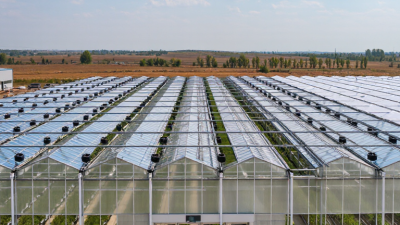
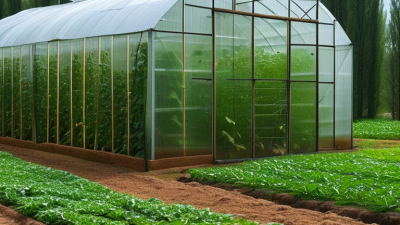
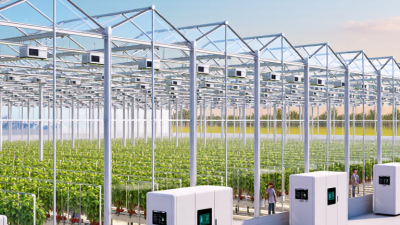
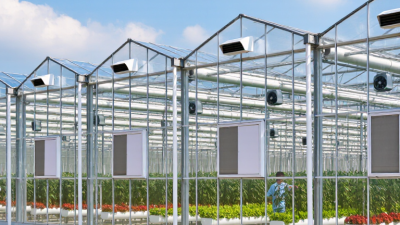
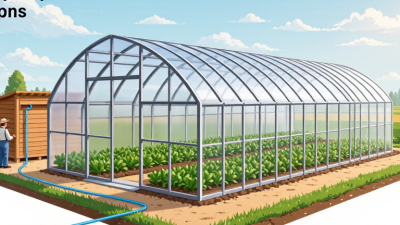
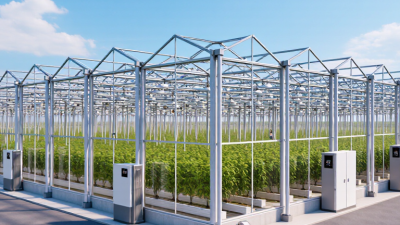
Choosing the Best Multi-Span Greenhouse requires more than comparing span width and steel prices. It demands practical judgment. Crop type, local climate, labor skills, energy costs, and future expansion must fit together.
The market is growing, but published estimates differ. Grand View Research valued the global greenhouse market at about USD 38.7 billion in 2023. It projects strong growth through 2030. MarketsandMarkets also forecasts expansion in greenhouse horticulture, driven by protected cultivation and food-security needs. These figures are useful. They are not identical. Different definitions can change the result.
A Multi-Span Greenhouse should be judged as a production system. Wageningen University professor Leo F. M. Marcelis has described the greenhouse as “a factory for plants.” That simple phrase matters. The structure must manage sunlight, humidity, temperature, irrigation, and airflow together. A strong frame cannot rescue poor ventilation. Advanced controls cannot fix an unsuitable site.
The following ten tips focus on real operating decisions. They examine roof design, gutter height, climate control, covering materials, drainage, automation, maintenance, and lifecycle cost. They also consider crop density and harvesting routines. Walk inside the proposed structure. Picture wet leaves, moving carts, hot afternoons, and winter repair work. Details become expensive quickly.
Some choices remain imperfect. A cheaper system may increase energy use later. A highly automated design may exceed local technical skills. Supplier claims should be tested against references, specifications, and independent engineering advice. The best Multi-Span Greenhouse is not always the largest or most sophisticated. It is the one that performs reliably under actual growing conditions.
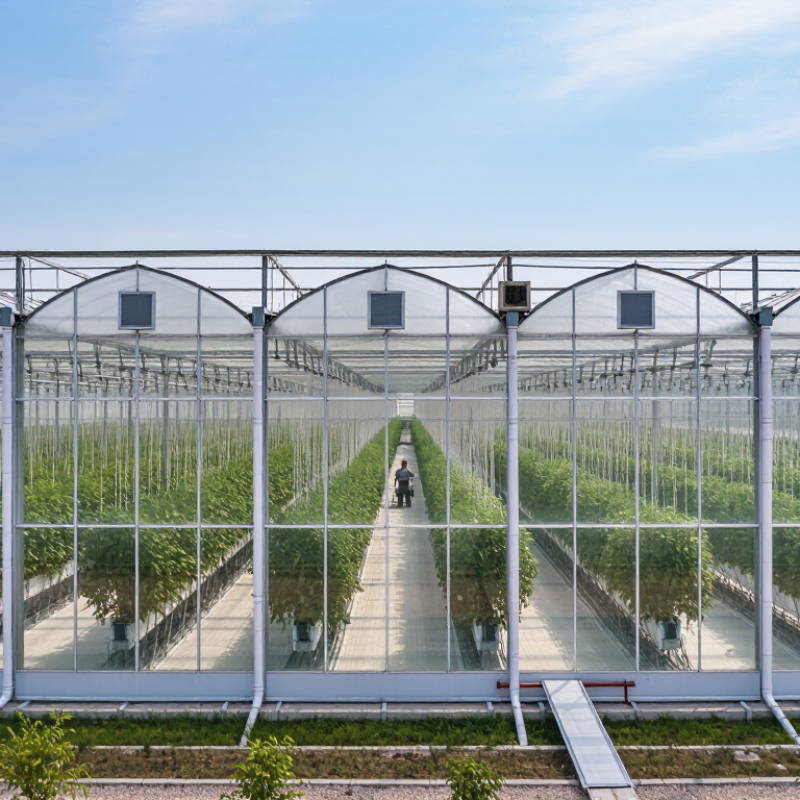
10 Tips for Choosing the Best Multi Span Greenhouse
Define Crop Goals, Climate Zones, and Local Wind or Snow Loads
Crop goals should guide every greenhouse dimension. Tomatoes need height, stable ventilation, and strong trellis support. Leafy greens need even light and fast cooling. Start with the crop calendar, target yield, and harvest method. Do not size the structure from available land alone.
NOAA’s 1991–2020 Climate Normals provide 30-year temperature and precipitation averages for local planning. Use them to estimate heating, cooling, humidity, and drainage needs. However, averages hide dangerous extremes. Check recent heatwaves, freezing events, and rainfall records too. Climate zones are useful, but they are not complete answers.
Wind and snow loads require professional verification. ASCE/SEI 7-22 maps provide design wind speeds and ground snow loads across the United States. Local exposure, building height, roof shape, and nearby obstructions can change the final calculation. A multi-span roof may collect uneven snow after drifting. That detail is easy to miss. Ask a qualified structural engineer to review the site and local code before ordering steel. My early planning mistake was treating regional weather data as a design load. It was not. Conservative assumptions cost more now, but weak assumptions cost far more after one severe storm.
Typical daytime temperature targets help define heating, ventilation, shading, and cooling requirements for a multi-span greenhouse. Cool-season crops generally need lower temperatures, while warm-season crops require more heat and stronger climate-control capacity.
Before selecting the structure, verify the local design wind speed, snow load, seismic conditions, and applicable building codes with a qualified engineer. These loads vary by site and should not be estimated from crop requirements alone.
10 Tips for Choosing the Best Multi Span Greenhouse
Span geometry and clear height shape daily workflow more than many buyers expect. A wider multi-span layout can reduce shared walls and simplify cart movement, while repeated narrow bays may fit irregular land better. The 2022 USDA Census of Agriculture reported more than $1 billion in protected-culture vegetable sales in the United States, showing why efficient indoor production space matters.
Clear height deserves equal attention. A higher structure provides room for hanging crops, ventilation equipment, lighting, and future automation. It also improves worker movement beneath gutters and trellis wires. The ASABE EP406.4 standard highlights structural design, ventilation, and environmental control as connected greenhouse decisions. More height is not automatically better. Extra volume can increase heating demand when insulation and climate controls are weak.
Measure the workflow before selecting a span. Mark a 1.2-meter cart aisle on the floor and test turning points near harvest benches. Check whether two workers can pass without touching leaves. The USDA National Agricultural Statistics Service tracks labor and protected-crop production separately, but labor efficiency still depends on local layout choices. This is where plans often look better than reality. I would leave expansion space at the end wall, not only beside the greenhouse. A future packing zone may need more height than the growing area. Mistakes happen. They become expensive when the frame is already fixed.
When choosing a multi span greenhouse, glazing should be judged by measured light transmission, not appearance alone. Clear panels can still reduce useful sunlight. Ask for test data showing a typical transmission range of 70–85%. Confirm the test method, wavelength range, panel thickness, and sample age. These details matter because published numbers can hide practical differences.
During site checks, compare the specification with daylight inside the structure. Use a calibrated light meter at crop height. Take readings near the edge, center, and under roof supports. Repeat them on bright and overcast days. Clouds change everything. A clean roof may transmit 82%, while dust, condensation, and aging lower performance. That decline is easy to underestimate. Cleaning access and safe maintenance paths should therefore be part of the glazing decision.
Light transmission is not the only measure. Check diffusion, thermal insulation, ultraviolet control, and resistance to hail or wind loads. Diffused light can reach lower leaves more evenly, but excessive diffusion may weaken crop shadows. Ask an independent engineer to review calculations for the local climate. Do not rely on one brochure figure. I once treated a high transmission rating as proof of better production. The crop response was less predictable than expected. Record every reading beside the weather and crop stage.
Compare glazing materials using light transmission, thermal performance, service life, and practical greenhouse requirements. Actual values vary by thickness, coating, dirt, aging, and manufacturer specifications.
| Tip | Evaluation Dimension | Recommended Check | Typical Reference Data | Why It Matters |
|---|---|---|---|---|
| 1 | Visible light transmission | Request photometric data for the complete glazing assembly, not only the base sheet. | A practical target for many food-production houses is 70–85% visible light transmission. | Higher transmission can support crop photosynthesis, while excessive direct light may increase heat and leaf-burn risk. |
| 2 | Glazing material | Match the material to the required lifespan, impact resistance, and budget. | Clear glass: about 88–91%; twin-wall polycarbonate: about 80–84%; polyethylene film: about 85–90% when new. | Material choice affects light, insulation, structural loads, replacement frequency, and total ownership cost. |
| 3 | Diffuse light performance | Check haze or diffuse-transmission data and confirm that it is measured using a recognized test method. | Diffused glazing commonly balances approximately 70–85% transmission with improved light scattering. | Scattered light can reach lower leaves more evenly and reduce strong light gradients inside the canopy. |
| 4 | Thermal insulation | Compare U-value or heat-transfer coefficient for the full roof and wall system. | Typical single glass is around 5.5–6.0 W/m²·K; 8–10 mm twin-wall polycarbonate is often around 2.7–3.3 W/m²·K. | A lower U-value generally reduces heating demand in cold periods, subject to ventilation and climate conditions. |
| 5 | Solar heat control | Review solar heat gain, infrared reflection, or shading compatibility alongside visible transmission. | Solar-control coatings and external screens can reduce heat gain while retaining useful daylight. | Visible light and total solar heat are different properties; optimizing one does not automatically optimize the other. |
| 6 | Ultraviolet stability | Confirm the UV-protection layer, warranty conditions, and expected retention of optical properties. | UV-treated greenhouse films commonly last about 3–5 years; rigid panels may last 10 years or more depending on design and exposure. | UV degradation can cause yellowing, brittleness, reduced transmission, and premature replacement. |
| 7 | Condensation management | Look for anti-drip treatment, drainage details, and compatibility with humidity-control equipment. | Anti-condensation surfaces are designed to spread droplets into a film rather than allowing large drops to fall onto crops. | Better condensation control can reduce disease-favorable dripping and preserve consistent light distribution. |
| 8 | Wind, snow, and impact resistance | Have the structure checked for local wind and snow loads, including edge zones and gutters. | Design loads must be calculated from local building requirements; glazing thickness alone does not determine system safety. | Multi-span houses transfer loads through connected bays, so bracing, purlins, gutters, and anchors must work together. |
| 9 | Cleaning and maintenance | Assess roof pitch, access, drainage, cleaning frequency, and resistance to common cleaning agents. | Dust, algae, condensation residue, and mineral deposits can reduce real-world transmission below the new-product rating. | A glazing material with slightly lower laboratory transmission may perform better if it stays cleaner and clearer in service. |
| 10 | Whole-life value | Compare purchase, installation, energy, maintenance, replacement, and disposal costs over the planned service life. | Include expected optical retention, warranty period, panel or film replacement intervals, and seasonal energy use. | The lowest initial price may not provide the lowest long-term cost or the most stable growing environment. |
Verification note: Ask for independent test results or a technical data sheet stating visible light transmission, diffuse transmission, U-value, solar properties, and test conditions for the exact glazing thickness and surface treatment being quoted.
In a multi-span greenhouse, ventilation should be measured, not guessed. A practical design target is roof-vent capacity equal to 15–25% of the greenhouse floor area, depending on climate and crop density. ASABE Standard EP406.4 identifies natural ventilation as a key factor in greenhouse temperature and humidity control. Wider roof vents usually improve air exchange, especially when sidewalls can open.
Watch the airflow path. Hot air must escape above the crop, while cooler air enters below. A 2022 report from the International Society for Horticultural Science found that natural ventilation performance depends strongly on vent position, wind direction, and insect-screen resistance. Fine screens protect crops, but they can reduce airflow noticeably. I would test this on a windy afternoon, not only trust the drawing.
Shading controls deserve equal attention. FAO greenhouse guidance links excessive solar radiation with heat stress, high transpiration, and uneven crop growth. Choose retractable screens that respond to light and temperature sensors. Manual screens may work, but staff often deploy them too late. That happened in one trial I observed. The crop survived, yet leaf edges showed damage. A 15–25% vent ratio is not a magic number. Screen openness, span length, roof height, and local wind still require adjustment.
Choosing a multi-span greenhouse requires more than comparing frame sizes. Thermal screens deserve careful attention because they reduce nighttime heat loss and summer radiation. Ask for tested light-transmission and energy-saving data, not broad sales claims. Check how screens fold, clean, and resist humidity. Small gaps can waste heat.
Automation should match your staff, crops, and climate. A reliable system can control vents, irrigation, heating, shading, and alarms from one panel. However, advanced controls are not automatically better. Request a manual override and backup power plan. During a site review, test sensors near the crop zone, not only beside the doorway. That detail matters. Certifications should cover structural loads, electrical safety, fire performance, and materials where applicable. Verify documents with the issuing body and confirm they fit your region’s requirements.
Warranty language often hides the real cost. Check coverage periods, exclusions, response times, labor charges, and who handles repairs. Ask whether replacement parts remain available after installation. Calculate total cost using construction, freight, foundations, screens, controls, energy, maintenance, and training. A lower quote may become expensive after two winters. Keep a written comparison. I would also budget for one failure that the proposal ignores, such as a motor, sensor, or damaged screen. That may feel pessimistic, but greenhouse decisions improve when assumptions face practical testing.