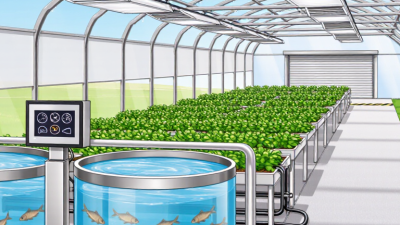
Plastic Film Greenhouse

Top 10 Commercial Greenhouse Manufacturers Worldwide

A commercial greenhouse is more than a frame covered in glass or film. It is a working system for managing light, temperature, humidity, water, and airflow around a crop. A grower walking between tomato rows may notice condensation on a roof panel, uneven warmth near a side vent, or seedlings leaning toward the brightest bay. Small details like these can affect daily operations. They also show why choosing a manufacturer requires more than comparing photographs or advertised capacity.

Cornell greenhouse researcher Dr. Neil Mattson studies controlled-environment crop production. A practical, paraphrased takeaway from his work is: “Choose greenhouse systems around crop needs, not equipment alone.” This is not a verbatim quotation. It captures a useful principle for evaluating manufacturers. The Top 10 Commercial Greenhouse Manufacturers Worldwide should therefore be considered through their engineering experience, structural options, climate-control systems, service support, and ability to adapt designs to different crops and locations. A high-tech facility may suit one grower, while a simpler structure may be more dependable elsewhere. No ranking fits every operation. Even a careful comparison can miss the everyday realities of maintenance, labor, and changing weather. Those details deserve a closer look.
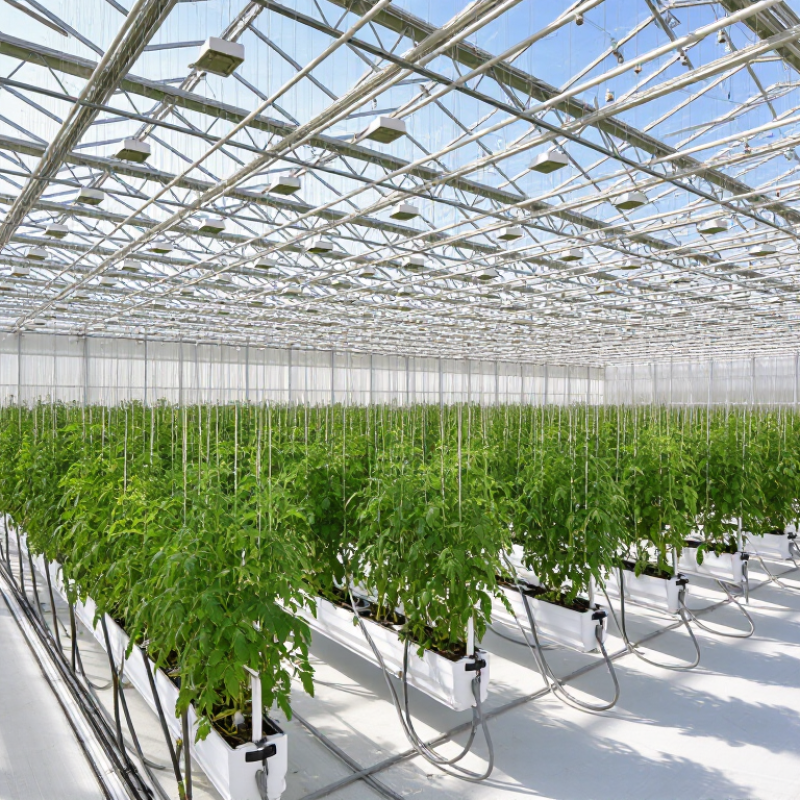
Top 10 Commercial Greenhouse Manufacturers Worldwide

Criteria for Evaluating Commercial Greenhouse Manufacturers

Evaluating commercial greenhouse manufacturers requires more than comparing quoted prices. Start with the growing plan: crop type, production area, local wind and snow loads, and expected temperature range. A supplier should explain how its structure, glazing, ventilation, and shading suit those conditions. Ask for engineering documents and clear assumptions, not just attractive renderings.

Look closely at practical details. Can roof vents and side screens maintain airflow on a still, humid afternoon? Are gutters sized for heavy rain, and can the frame support planned equipment? Request material specifications, corrosion protection details, warranty terms, and a project schedule. If automation is included, confirm who integrates sensors, irrigation, and climate controls. Small gaps in responsibility can become costly later.

References matter. Ask to speak with operators of similar facilities, and, where possible, visit a greenhouse after several growing seasons. Check how quickly the manufacturer responds to service requests and whether replacement parts are readily available. Compare the full installed cost, including foundations, utilities, freight, and commissioning. A scorecard helps, but it is imperfect; a low price or impressive specification sheet can still hide trade-offs. Be cautious when answers stay vague.

Top 10 Commercial Greenhouse Manufacturers Worldwide — Evaluation Criteria

Suggested weighting for comparing commercial greenhouse manufacturers

Structural design and code compliance, material durability, and climate-control capability receive the greatest emphasis in this proposed procurement rubric. The percentages are suggested evaluation weights, not measured market statistics or rankings of specific manufacturers; adapt them to local building codes, climate, crops, and project requirements.

Global Landscape of Commercial Greenhouse Production

Global commercial greenhouse production is diverse, not a single standardized market. In cooler regions, glass structures often support year-round vegetables with heating, screens, and automated climate controls. In warmer regions, plastic-covered tunnels can offer a lower-cost way to protect crops from rain, wind, and pests. The USDA’s 2022 Census of Agriculture reports $18.3 billion in U.S. sales across greenhouse, nursery, floriculture, and sod operations. This broad category is a useful scale marker, but it is not greenhouse-only data.

Tips: Match the structure to the crop and climate. Check summer ventilation, winter heating needs, water quality, and local repair access before comparing suppliers. A low purchase price can hide operating costs.

Worldwide comparisons remain difficult because reporting methods and greenhouse definitions vary. FAOSTAT helps compare crop production, but it does not provide one consistent global count of commercial greenhouse area. Buyers should therefore assess practical specifications: usable growing area, light transmission, corrosion resistance, ventilation capacity, and the availability of replacement parts. Ask for performance records from comparable climates, not just laboratory figures. Even a well-designed house can underperform when shading, irrigation, or staff training is overlooked; that deserves more attention than glossy projections.

Profiles of Ten Leading Manufacturers Worldwide

These ten anonymized profiles describe different strengths found among commercial greenhouse manufacturers worldwide. They are illustrative, not a verified ranking; capabilities vary by company and project. A northern European specialist may emphasize insulated glazing, climate screens, and precise environmental controls. A Mediterranean producer may favor structures designed for strong sunlight and ventilation. Details matter. A North American integrator may combine greenhouse frames with irrigation, controls, and installation support. An East Asian manufacturer may focus on automated equipment and compact production layouts.

A South American supplier may adapt structures to regional crops and variable rainfall. A Middle Eastern builder may prioritize heat management, shade, and efficient water delivery. An Australian manufacturer may offer modular designs suited to remote sites, where transport and maintenance shape decisions. An Indian producer may concentrate on practical structures with accessible replacement parts. Cost is only one factor. A Chinese export-focused manufacturer may provide a broad range of standardized components, while a regional African fabricator may tailor frames to local materials and repair skills.

Comparisons should include engineering documentation, corrosion protection, ventilation capacity, warranty terms, and after-sales support. Ask for drawings, material specifications, and references from projects with similar climates. A polished rendering cannot show how a vent performs in a storm. Nor does a low purchase price reveal long-term operating costs. Real-world performance depends on installation quality, crop needs, and routine maintenance. Some specifications remain hard to compare across suppliers. That deserves careful review.

Comparison of Technologies, Services, and Project Capabilities

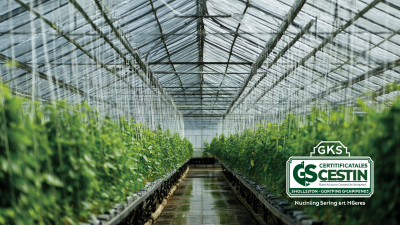
A useful comparison of commercial greenhouse manufacturers starts with climate-control architecture, not frame size. Glass structures admit strong light but require careful heat management; plastic-film houses cost less initially and may need more frequent covering replacement. Multi-span designs suit large, connected production blocks, while modular houses can fit phased construction. The difference matters. Compare screens, ventilation, heating, fertigation, and sensor integration as one operating system.

Grand View Research estimated the global greenhouse market at USD 30.63 billion in 2022 and forecast 9.8% annual growth through 2030. That expansion makes service capacity more important: ask whether commissioning, grower training, spare parts, and remote diagnostics are included. The IEA’s 2023 buildings analysis attributes about 30% of global final energy use to buildings. It is not a greenhouse benchmark, but it reinforces the value of requesting modeled heating and cooling loads, not just equipment lists.

Project capability shows up in details. Can the supplier adapt foundations to local soil, drainage, wind exposure, and water quality? Can it deliver automation and irrigation plans alongside structural drawings? Ask for comparable project references and acceptance-test criteria. A polished rendering proves little. One weakness in my own comparison: published specifications rarely reveal how quickly faults are resolved during peak harvest. That gap deserves scrutiny.

Top 10 Commercial Greenhouse Manufacturers Worldwide — Comparison of Technologies, Services, and Project Capabilities

This is a non-ranked comparison of ten established commercial greenhouse system configurations, not a company-by-company ranking. No company or brand names are shown; equipment packages and services vary by supplier, region, and project.

No. Commercial greenhouse system Typical structure and covering Common technology options Typical crop and climate fit Project and service considerations
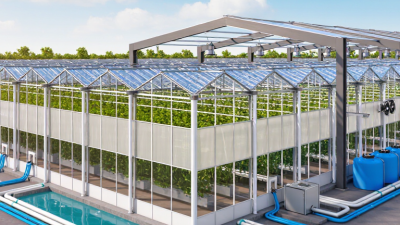
1 Venlo-style gutter-connected glass greenhouse Repeating narrow roof bays with gutters; commonly uses horticultural glass. Roof ventilation, thermal and energy screens, heating, supplemental lighting, CO₂ dosing, and computer-based climate control may be specified. Commonly used for year-round production of tomatoes, cucumbers, peppers, and ornamentals where controlled conditions are needed. Often planned as an integrated package; structural design, climate equipment, controls, irrigation, installation, and commissioning may be supplied under separate or turnkey contracts.
2 Wide-span glass greenhouse Glass-covered bays with wider spans than conventional narrow-bay layouts; configuration is project-specific. Ventilation, screens, heating, fertigation, and climate-control systems can be selected to suit the site and crop. Suitable for commercial production where large internal work areas and durable transparent cladding are priorities. Requires site-specific structural engineering, including consideration of local wind, snow, seismic, and drainage conditions.
3 Multi-span polycarbonate greenhouse Connected steel or aluminum frames clad with multiwall polycarbonate panels. Natural ventilation, circulation fans, shading, heating, irrigation, and automated control are common options. Used for vegetable, nursery, and ornamental production; the insulated panels can be useful where reduced heat loss is a design goal. Panel thickness, support spacing, fixing details, and replacement access should be included in the project specification.
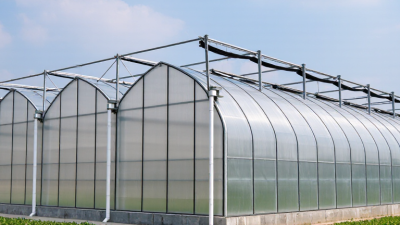
4 Multi-span polyethylene-film greenhouse Connected metal frames covered with one or more layers of greenhouse-grade polyethylene film. Roll-up sides, roof vents, inflation fans for double-layer film, screens, heating, and drip irrigation are available options. Widely used for commercial vegetables and nurseries, particularly where a lower initial structure cost is important. Film service life and replacement planning depend on film specification, local weather, installation, and maintenance; installation and crop-system scope should be confirmed.
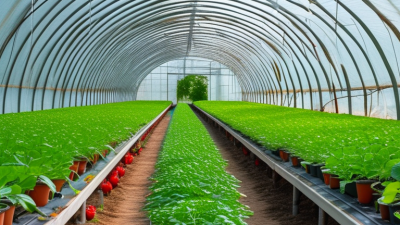
5 Single-span tunnel greenhouse Individual arched structures, typically covered with greenhouse film; tunnels may be grouped across a site. Manual or motorized side ventilation, end-wall ventilation, drip irrigation, and basic environmental controls can be added. Often used for seasonal or protected vegetable production and for sites requiring modular construction. Expansion can be modular, but utilities, access, wind exposure, and consistent ventilation should be planned across the full site.
6 Retractable-roof greenhouse A movable roof or covering system that can open or close according to weather and crop requirements. Automated roof movement may be coordinated with rain sensors, wind limits, temperature controls, and irrigation systems. Can support crops that benefit from natural conditions at some times and weather protection at others. Design depends on local weather limits, safe operating conditions, controls, and maintenance access for moving components.
7 Naturally ventilated sawtooth greenhouse A multi-bay roof profile with high-level ventilation openings, commonly built with film or rigid cladding. Roof vents, roll-up sides, insect screening, circulation fans, and automated vent controls may be incorporated. Often considered in warm climates where passive air exchange is central to temperature management. Performance depends on local wind patterns, vent area, insect-screen pressure drop, building orientation, and site-specific engineering.
8 Screenhouse or insect-proof net structure Frame covered with insect-proof mesh rather than a fully transparent greenhouse cladding. Mesh specification, entry vestibules, shade netting, and irrigation can be selected for the target crop and pest-management plan. Used in warm regions for crop protection and insect exclusion; it generally provides less environmental control than a sealed greenhouse. Mesh size affects airflow and pest exclusion; structural loading, access design, and local pest requirements should be assessed.
9 Rain-shelter greenhouse Open-sided or highly ventilated frame with a roof covering, often film, designed primarily to protect crops from rainfall. Roof drainage, gutters, drip irrigation, and optional side protection are common design elements. Used in humid or rainy production areas for crops that benefit from rain protection while retaining substantial natural ventilation. Drainage capacity, runoff management, wind exposure, and local permitting are key project considerations.
10 Hybrid glass-and-film greenhouse Combines different coverings or structural zones, such as glass in selected areas and film over other production bays. Climate, irrigation, lighting, and automation packages can be designed separately by zone or integrated across the site. Can suit projects with different crop zones, investment stages, or environmental-control requirements. Interfaces between structures, controls, utilities, and maintenance plans need coordination; engineering and installation scope varies by project.

Key Factors in Choosing a Greenhouse Manufacturer

Choosing a commercial greenhouse manufacturer starts with your crop, climate, and operating plan—not a glossy catalog. A leafy-greens site in a windy coastal area needs different glazing, ventilation, and structural calculations than a propagation house. Ask how the supplier accounts for local wind and snow loads, manages humidity, and limits condensation above crop rows. Request drawings, material specifications, and a clear list of installation responsibilities. Details matter.

Look beyond the purchase price. Compare energy-use estimates, replacement intervals for films or panels, corrosion resistance, and spare-parts availability. Ask for references from facilities with similar crops and climates. Speak with operators about commissioning delays and service response. A credible manufacturer should explain assumptions and limitations, rather than promise guaranteed yields. Read warranty exclusions carefully. They can be revealing.

Tips: Share a site plan, crop schedule, peak temperatures, and utility constraints before requesting a quote. Ask for a sample ventilation calculation and written service-response terms. Visit a working installation if possible. Take notes. No proposal answers everything; maintenance duties sometimes become clear only after handover. Treat that gap as a real question, not a minor detail.