Choosing a Polyethylene Greenhouse starts with the conditions it must handle, not just its price or size. Wind, heavy rain, summer heat, and winter frost can all affect how well a structure performs. A frame that feels sturdy in a showroom may need extra anchoring in an exposed garden. Small details matter.
The covering deserves close attention. Compare its thickness, light transmission, UV protection, and expected replacement needs, while checking what the supplier actually specifies. Clear film can admit useful light, but ventilation still matters when warm, humid air gathers around leaves. Look for doors and vents that are practical to open, even when the weather is less than ideal. It is easy to overlook this.
This guide will help you weigh frame materials, dimensions, cover quality, ventilation, anchoring, and maintenance against your crops and local climate. Think about what you plan to grow, how often you can tend the structure, and whether replacement film is readily available. A larger greenhouse offers more room, but it may also require more heat, upkeep, and time. There is no perfect choice for every grower. Product descriptions can sound reassuring; real performance depends on installation and conditions on site. Use clear specifications, compare warranties carefully, and treat unusually broad promises with caution. The best fit is usually the one you can secure, ventilate, and maintain consistently.
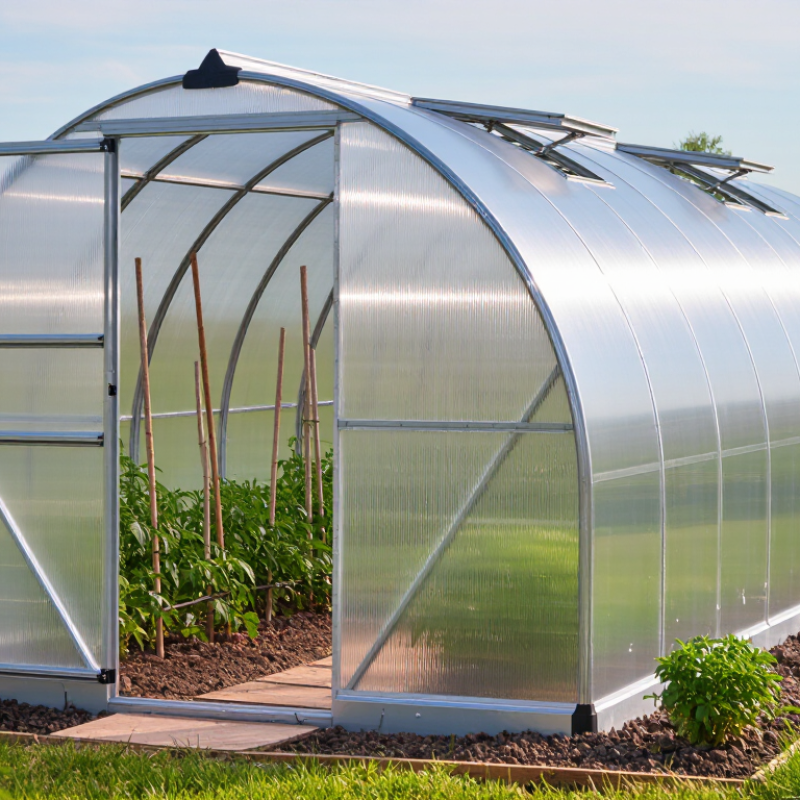
Define Crop, Climate, and Structural Needs Before Choosing Greenhouse Film
Start with the crop, not the film. Leafy greens often benefit from even, diffused light, while fruiting crops may need stronger light and careful heat management.
Check the crop’s temperature range, humidity tolerance, and seasonal schedule. Condensation control matters, too. Dripping water can encourage disease and damage delicate leaves, so consider an anti-condensation film where conditions warrant it.
Next, assess the site and frame. A windy ridge, heavy winter snow, or intense summer sun can change which film thickness and service life make sense.
Polyethylene film is available with different light-diffusing, UV-stabilized, and thermal properties; no single option fits every climate. Check that the frame spacing, channels, and fasteners suit the film and expected weather loads. This detail is easy to underestimate. Poor tension can cause flapping, wear, and early tears.
Compare the film’s stated lifespan with your replacement plan, and ask how local conditions may affect it. A specification sheet helps, but it cannot replace a sound structure. When snow or wind loads are uncertain, have a qualified local professional review the frame before installation.
A 6-mil polyethylene film measures about 150–152 µm thick. It is a common commercial baseline because it balances light entry, handling, and cost. University of Massachusetts Extension’s greenhouse-glazing guidance puts polyethylene light transmission at roughly 85%, with a typical service life of about two to four years. Treat those figures as planning ranges, not promises: dust, wind, installation tension, and sunlight exposure all affect performance.
Thickness alone does not tell the whole story. Check that the film is greenhouse-grade and UV-stabilized, then compare its warranty and expected service life. A taut, well-secured sheet is less likely to flap against the frame or tear at fasteners. I would not assume that a thicker film automatically lasts longer; formulation and site conditions matter too. That distinction is easy to miss.
Tips: Before buying, measure the roof and sidewalls, then allow extra material for overlaps and secure edges. Inspect the film each season for cloudy patches, brittle folds, or small tears. A tiny tear can grow quickly in gusty weather.
A polyethylene greenhouse can look bright while still losing useful light. University of Massachusetts Amherst Extension’s greenhouse-glazing guidance places new polyethylene film’s light transmission around 85–90%, depending on film type and construction. Treat that range as a starting point, not a guarantee. A frame casts shadows. Dust, condensation, and aging film reduce light reaching the crop. Small details matter.
Check whether a supplier’s figure describes total light or photosynthetically active radiation (PAR), the wavelengths plants use for photosynthesis. These measurements are not interchangeable. FAO’s Good Agricultural Practices for Greenhouse Vegetable Crops also emphasizes matching greenhouse conditions to crop needs. A seedling bench may benefit from high, even light; leafy crops can respond differently from fruiting crops. Ask for test conditions and a current technical data sheet. Then compare the stated transmission with your structure’s real conditions. On a cloudy morning, even a few shaded rows can be noticeable. I would not choose film by one percentage alone. A clear specification helps, but field performance deserves a second look.
A film rated for three to four years can be a practical choice, but that figure is not a promise. It usually reflects expected outdoor service under specific conditions. Strong sunlight, high temperatures, and poor installation can shorten its useful life. Check the rating details, including how the service period is defined.
UV stabilization slows sunlight-related weakening, helping polyethylene stay flexible and resist cracking. Match the film’s rating to how long you expect to use it before replacement. For a temporary growing space, a shorter rating may be adequate. For a permanent greenhouse, replacing film every few seasons can cost more in labor and lost growing time. That matters. Still, the number can be misleading.
Look closely at the roof edges and doorways during routine inspections. These spots often show brittleness or tearing first, especially where film rubs against a frame. Keep the covering taut, avoid unnecessary contact with sharp edges, and follow the supplier’s guidance on compatible cleaners and nearby materials. A longer UV rating may help, but it cannot compensate for poor handling. Climate varies. So does exposure. Consider local sunlight, wind, and maintenance habits before choosing, and treat the stated lifespan as a planning estimate rather than a guarantee.
How to Choose the Best Polyethylene Greenhouse?
Single-layer polyethylene is inexpensive and simple to install, but it loses more heat on cold nights. An inflated double layer creates a still-air space between two films. Ontario’s Ministry of Agriculture, Food and Rural Affairs reports that this arrangement can reduce heat loss by about 30% compared with a single layer. University of Massachusetts Extension guidance also identifies double-layer glazing as an energy-saving option. That matters.
The savings depend on the installation. A small inflation fan must keep the space between films evenly pressurized, while loose edges and punctures can undermine performance. Check seams, doors, and film tension; a visible sag can signal trouble. Double layers also reduce light transmission, so compare the film’s light-transmission rating with the needs of your crops. Some growers may value extra winter insulation more than maximum daylight.
For a heated greenhouse in a cold climate, inflated double polyethylene is often worth evaluating against its added fan and installation costs. In a mild climate or an unheated tunnel, a single layer may be adequate. Do not treat the 30% figure as a guarantee: wind, leaks, humidity, and heating practices change actual results. The less glamorous detail is maintenance. A neglected inflation tube can quietly erase part of the expected benefit.
| Comparison Factor | Single-Layer Polyethylene | Inflated Double-Layer Polyethylene |
|---|---|---|
| Film construction | One layer of greenhouse film spans the frame. | Two layers of film are separated by a low-pressure air space, maintained by a small inflation fan. |
| Heat retention | More heat escapes through the covering, so heating demand can be higher in cold conditions. | The air space provides added insulation; inflated double layers can reduce heat loss by about 30% compared with a single layer. |
| Light transmission | Generally allows more light through than a double-layer covering, all else being equal. | Usually transmits somewhat less light because light passes through two film layers; the actual amount depends on film type, cleanliness, and installation. |
| Installation needs | Uses a simpler covering setup and does not require an inflation fan. | Requires an inflation fan, a power supply, and well-sealed edges to maintain the air space. |
| Operating considerations | Fewer components to inspect; check film tension, tears, and attachment points. | Check fan operation, air tubes, and seals. A puncture or fan failure can reduce the insulating air space. |
| Relative initial cost | Typically lower, because it uses one film layer and a simpler setup. | Typically higher because it uses more film and needs an inflation system. |
| A good fit for | Mild climates, seasonal use, or growers prioritizing simplicity and maximum light transmission. | Cold seasons or climates where reducing heat loss and heating demand is a priority. |
| Key choice | Choose single-layer film when simpler installation and greater light transmission matter most. | Choose inflated double-layer film when improved insulation is worth the added equipment and potential reduction in light transmission. |