Top 10 Intelligent Greenhouses Transforming Agriculture in China?
The agricultural landscape in China is rapidly evolving, driven by innovation and sustainability. Among the pivotal advancements are Intelligent Greenhouses. These high-tech structures merge agriculture with technology, optimizing crop production while minimizing resource use.
Intelligent Greenhouses employ advanced sensors and automation to monitor environmental conditions. They can adjust temperature, humidity, and light levels in real-time. This creates an ideal environment for plants, leading to higher yields and better quality crops. However, challenges remain, such as the initial investment costs and the need for skilled operators.
The integration of AI and data analytics further enhances these systems. Farmers can track growth patterns and predict potential issues. Despite the remarkable benefits, the reliance on technology raises questions about sustainability and the environment. The balance between innovation and natural processes is delicate and requires careful consideration. Intelligent Greenhouses represent a transformative step, yet they also invite reflection on how we engage with agricultural practices.
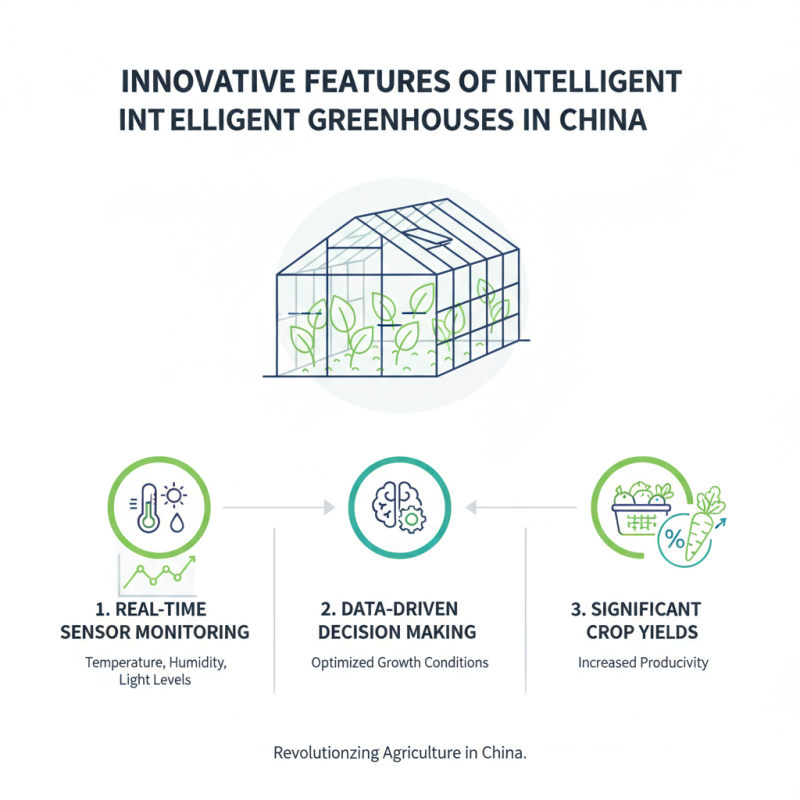
Innovative Features of Intelligent Greenhouses in China
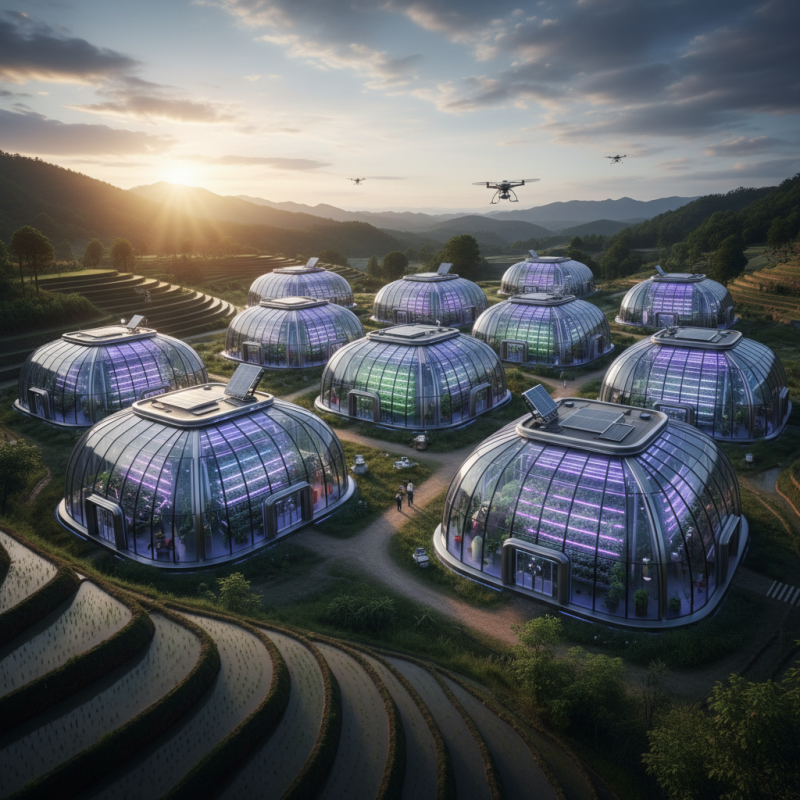
Intelligent greenhouses in China are revolutionizing agriculture. These structures leverage technology to optimize the growth conditions for crops. Sensors monitor temperature, humidity, and light levels in real time. This data helps farmers make quick decisions. As a result, crop yields increase significantly.
One innovative feature is automated climate control. This system adjusts the greenhouse environment based on real-time data. It can cool or heat plants as needed, ensuring ideal growing conditions year-round. Another aspect is the use of artificial intelligence. AI helps predict diseases or pests by analyzing plant health data. Nevertheless, challenges exist. Not all farmers have access to such advanced technology. Some lack the training to utilize these tools effectively.
Sustainability is a key focus in intelligent greenhouses. Water recycling systems reduce waste. Hydroponics and vertical farming methods are often employed. These techniques conserve space and resources. However, the initial investment can be quite substantial. Many small-scale farmers may struggle to adopt these innovations. Balancing technology and tradition is a constant struggle in modern agriculture.
Leading Technologies Driving Smart Agriculture Practices
In China, intelligent greenhouses are revolutionizing agriculture. Innovative technologies are propelling these shifts. Sensors can monitor humidity and temperature. These tools enable a precise control of the greenhouse environment. Automated systems handle tasks like watering and nutrient delivery.
Data analytics play a crucial role. Farmers can assess crop health through real-time data. This helps optimize growth conditions. However, challenges remain. Access to technology varies across regions. Not all farmers can afford these advanced systems. Some may find it difficult to adapt.
Moreover, integrating energy-efficient designs is vital. Renewable energy sources can reduce operational costs. Farmers must reflect on sustainability. Balancing technology with nature is crucial for long-term success. Embracing these intelligent practices could transform the agricultural landscape.
Case Studies of Successful Intelligent Greenhouses
In recent years, intelligent greenhouses have revolutionized agriculture in China. These structures integrate advanced technologies, optimizing crop yields while reducing resource consumption. A report from the China Agricultural University highlights that intelligent greenhouses can increase productivity by up to 30% compared to traditional methods.
One successful case study involves a greenhouse in Shandong Province. This facility employs sensors to monitor temperature and humidity. Data is analyzed in real-time, allowing for precise climate control. Additionally, automated irrigation systems conserve water. The results showcase a 25% reduction in water usage, proving intelligent greenhouses can promote sustainability.
Despite these advancements, challenges remain. High initial costs deter some farmers from adopting these technologies. Training for local workers is also essential to ensure they can operate complex systems effectively. As intelligent greenhouses continue to evolve, addressing these issues will be crucial for broader acceptance in the agricultural community.
Environmental Benefits of Greenhouse Innovation in Agriculture
Intelligent greenhouses are revolutionizing agriculture in China. These innovations lead to significant environmental benefits. By using advanced technologies, they optimize resource use and minimize waste. Temperature control, humidity management, and automated irrigation are some critical features. These systems help reduce energy consumption and lower carbon footprints dramatically.
Implementing intelligent greenhouses can still pose challenges. Initial costs may be high. Farmers must also invest time in learning new technologies. Proper training is essential to maximize their potential. Misuse could lead to less efficiency instead of gains.
Tips: Choose appropriate crops for greenhouse conditions. Monitor the environment to ensure optimal growth. Regular maintenance is key to avoid breakdowns. Intelligent greenhouses must continue evolving to address sustainability issues. They offer great promise but need careful management to achieve their full potential.
Top 10 Intelligent Greenhouses Transforming Agriculture in China
This chart illustrates the environmental benefits achieved by innovative greenhouse technologies in China's agriculture sector. The metrics represented include reduction in water usage, increase in crop yield, and decrease in pesticide use. The following data showcases the impact of these intelligent greenhouses.
Future Trends in Intelligent Greenhouse Development in China
China's agricultural landscape is undergoing a remarkable transformation. Intelligent greenhouses are at the forefront, bringing about innovative practices in farming. These high-tech facilities utilize advanced climate control, automated irrigation, and smart sensors. They contribute significantly to crop yield and resource efficiency. Farmers can now monitor growth conditions remotely, ensuring optimal environments for various plants.
Future trends in intelligent greenhouse development show exciting potential. We expect increased integration of AI and machine learning, enabling more precise decision-making. Data analytics will play a crucial role in predicting crop behavior. However, challenges remain. Some farmers are hesitant to adopt these technologies due to high initial costs and a lack of technical expertise. Addressing these barriers is essential for wider implementation.
Sustainability is another key focus. Intelligent greenhouses can reduce water usage and energy consumption, addressing critical environmental concerns. Yet, the reliance on technology raises questions about dependency. As advancements continue, striking the right balance between innovation and traditional methods will be vital. The journey is still unfolding, with much to learn and adapt.
Top 10 Intelligent Greenhouses Transforming Agriculture in China
| Greenhouse Type |
Size (Hectares) |
Location |
Investment (Million USD) |
Key Features |
| Hydroponic Greenhouse |
2 |
Shanghai |
10 |
Automated irrigation, AI smart management |
| Vertical Greenhouse |
1.5 |
Beijing |
15 |
Space-efficient design, LED lighting |
| Solar Greenhouse |
3 |
Guangzhou |
8 |
Energy-efficient, climate control |
| Intelligent Climate-Control Greenhouse |
4 |
Chengdu |
12 |
Data-driven climate management |
| Smart Sensors Greenhouse |
2.5 |
Hangzhou |
11 |
Real-time monitoring, IoT connectivity |