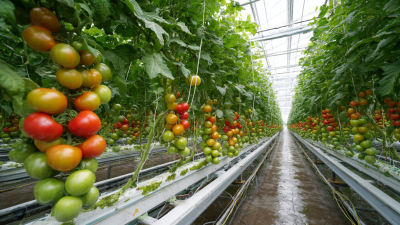
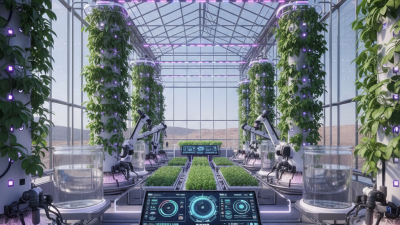
What is Hydroponics Greenhouse Benefits for Global Buyers?
The rise of hydroponics greenhouse technology is transforming agriculture. This method allows plants to grow without soil, using nutrient-rich water instead. For global buyers, the benefits of hydroponics greenhouses are becoming increasingly compelling. They offer a solution to various agricultural challenges, including limited arable land and unpredictable climate conditions.
Hydroponics greenhouses can significantly enhance crop yields and quality. With controlled environments, plants thrive year-round. This approach can reduce water usage by up to 90%. In urban areas, these greenhouses can promote local food production, reducing transportation costs and emissions. Despite these advantages, adopting hydroponics systems can be costly and complex. Not every buyer may fully grasp the technology involved, leading to potential challenges.
Moreover, knowledge and experience are critical for success. Buyers must consider ongoing maintenance and operational costs. While the promise is great, the reality demands careful planning and dedication. Hydroponics greenhouses represent a modern solution, but they require commitment and understanding to truly realize their full potential.
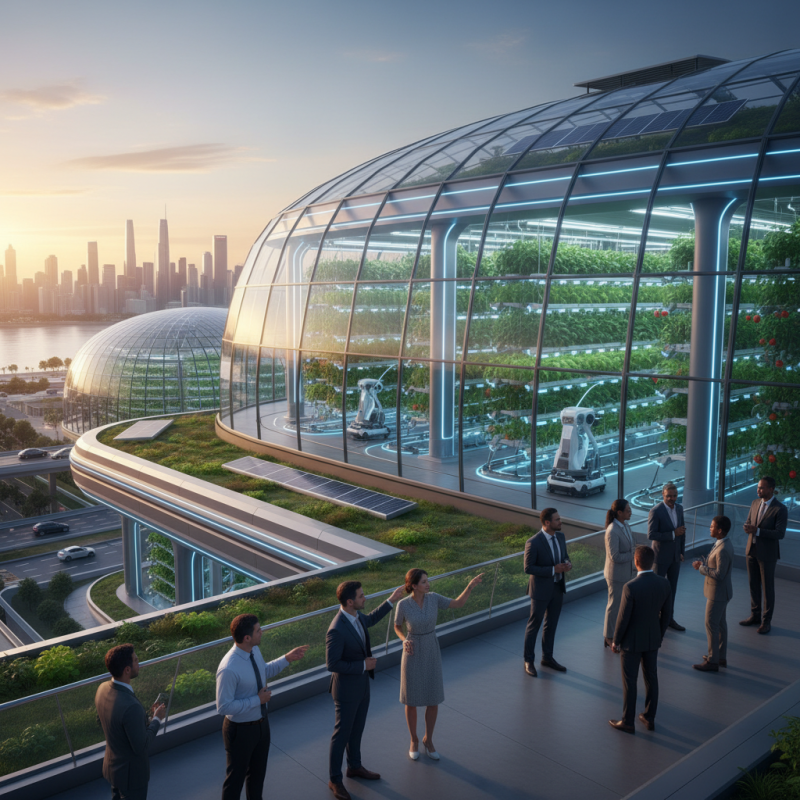
Benefits of Hydroponics Greenhouses for Sustainable Agriculture Practices
Hydroponics greenhouses offer significant benefits for sustainable agriculture. This method enables crops to grow in nutrient-rich water rather than soil. Research shows that hydroponic systems can use up to 90% less water compared to traditional farming. This efficiency is crucial as global water scarcity continues to rise.
Nutrient management is another advantage. Hydroponics allows precise control over nutrient delivery. Growers can tailor solutions for specific crops, optimizing growth and yield. According to a 2022 study by the Agriculture and Food Research Initiative, hydroponically grown tomatoes can produce yields up to 30% higher than soil-grown counterparts.
However, it's essential to consider the initial investment and technology required. Hydroponic systems can be costly to set up and maintain. Some farmers may struggle with the transition from conventional methods. Ongoing education and support are vital for those adapting to this innovative approach. Balancing these factors is necessary for achieving long-term success in sustainable agriculture.
Improved Yields: Statistics on Crop Production in Hydroponic Systems
Hydroponic systems are transforming crop production. According to a report by the USDA, yields in hydroponic setups can be 20-30% higher than traditional soil farming methods. This increase is primarily due to enhanced control over nutrients, water, and environmental factors. Growers report quicker harvest cycles. Some vegetables can mature in just three to four weeks.
Improved yields come with challenges. Pollination can be difficult in closed environments. Moreover, initial setup costs for hydroponic systems can be substantial. However, studies show that the long-term benefits often outweigh these hurdles. For example, hydroponic farms can produce 10 times more food per square meter compared to conventional farms, according to a report by the National Center for Biotechnology Information.
Data illustrates a growing trend. The global hydroponics market was valued at $2.36 billion in 2020 and is projected to grow significantly. The demand for local, fresh produce fuels this growth. Sustainability is a primary driver, as hydroponic systems use up to 90% less water than traditional farming. Nonetheless, this technological shift requires education and adaptation from growers. The path ahead is promising yet demands careful consideration.
Hydroponics Greenhouse Improved Yields: Crop Production Statistics
Water Efficiency: Analyzing Water Use Reduction in Hydroponics
Hydroponics is revolutionizing agriculture by promoting
water efficiency. It utilizes 90% less water than traditional farming methods.
According to a report by the International Journal of Agroecology, hydroponic systems can produce a
higher yield with significantly lower water usage. This reduction is crucial as global water scarcity
becomes an increasing concern.
Hydroponics allows for precise control over nutrient solutions and
growth conditions. These systems recirculate water, minimizing waste. The U.S. Department of Agriculture
estimates that hydroponic growers can save up to 98% of water compared to
soil-based farming. This efficiency not only conserves resources but also enhances
food security in arid regions.
However, the initial investment and technology setup can be barriers to entry. Some growers struggle with the
transition from traditional practices. These challenges highlight the need for ongoing research and support.
Continued innovation in hydroponic methods can address these issues and further promote
sustainable practices in agriculture.
Global Market Trends: Hydroponics Growth Rate and Economic Impact
The hydroponics market is experiencing remarkable growth. According to a recent report, the global hydroponics market is projected to reach USD 16 billion by 2026, growing at a compound annual growth rate (CAGR) of 24%. This rapid expansion reflects the increasing demand for sustainable agricultural practices. In urban areas, where space is limited, hydroponic greenhouses offer an effective solution to maximize crop yield.
Economic impacts are significant. Hydroponics reduces water usage by up to 90% compared to traditional farming methods. This efficiency is crucial as regions face water scarcity challenges. Moreover, hydroponic systems can deliver produce faster—often within weeks—resulting in higher revenue for farmers. However, the initial setup costs can be daunting for newcomers. Many potential growers hesitate, unsure if the investment will pay off.
The growing interest in local food sourcing is influencing market trends. Consumers seek fresh produce, and hydroponics fits the demand. Nonetheless, some challenges persist. Knowledge gaps exist among new entrants, posing risks for crop failures. Continuous education is essential for optimizing production. While the future looks promising, it’s vital to approach these innovations with care and consideration.
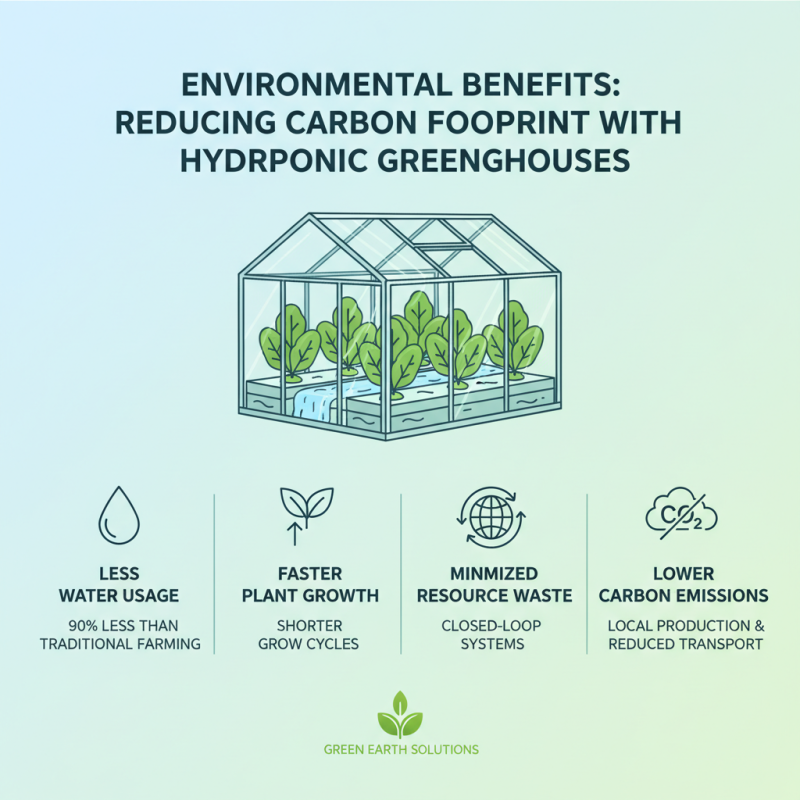
Environmental Benefits: Reducing Carbon Footprint with Hydroponic Greenhouses
Hydroponic greenhouses present a viable solution for reducing carbon footprints. These structures utilize controlled environments, minimizing resource waste. Water usage is significantly lower compared to traditional farming. Plants grow faster, which means less time to harvest and distribute.
One key benefit is the reduction of transportation emissions. Many hydroponic operations are located near urban areas. This shortens the supply chain, leading to fresher produce with lower transportation costs. Less travel equals reduced greenhouse gas emissions.
**Tip:** Consider clustering hydroponic farms in urban regions to maximize efficacy.
While hydroponic systems are efficient, they are not without challenges. Initial setup costs can be high. Additionally, they require constant monitoring. Growing conditions must be optimal for success. Regular maintenance is essential.
**Tip:** Invest in quality sensors for better control over the greenhouse environment.
Incorporating hydroponic greenhouses into food production can help combat climate change. However, it is crucial to continue refining techniques. Sustainable practices must evolve with technology to enhance their effectiveness.