2026 Best Commercial Greenhouse Trends and Tips for Success?
The world of Commercial Greenhouse cultivation is evolving rapidly. In 2026, new trends are reshaping the landscape. Growers must stay informed to thrive.
Sustainability is a key focus. Many greenhouses are adopting eco-friendly practices. Water conservation and energy efficiency are no longer optional. Technologies like automated irrigation systems and LED lighting are becoming standard. These advancements improve productivity and reduce costs. However, not all growers adapt quickly; this can hinder success.
Incorporating innovative designs and smart technology is essential for a thriving Commercial Greenhouse. The role of data analytics is increasing. Monitoring growth conditions can lead to improved yields. Yet, some may overlook these developments, struggling to keep pace. Reflecting on these trends can help growers identify areas for improvement. Understanding the market will empower success in the ever-competitive greenhouse industry.

2026 Trends in Commercial Greenhouse Design and Technology
In 2026, commercial greenhouse design will focus on sustainability and efficiency. Important materials include lightweight, durable options that maximize light penetration. Glass and polycarbonate are popular, but consider alternatives to reduce costs. Vertical farming will gain traction as urban gardening becomes more prevalent. This method optimizes space and resources, allowing for higher yields in limited areas.
Automation technology will play a vital role. Sensors can monitor temperature, humidity, and light levels. These systems adjust conditions in real-time, enhancing plant growth. However, reliance on technology may pose challenges. Equipment can fail, leading to potential crop loss. Regular monitoring and backups are essential for mitigating risks.
Integrating renewable energy sources is another key trend. Solar panels installed on greenhouse roofs can power operations and decrease energy bills. Yet, the initial investment may be a concern for some growers. Balancing upfront costs with long-term savings requires careful planning. Embracing these trends is crucial for a successful future in commercial greenhouse operations.
2026 Commercial Greenhouse Trends
This chart represents the projected adoption rates for various trends in commercial greenhouse technology and design for 2026. It highlights the growing interest in hydroponics, vertical farming, smart technology, sustainable practices, and automated systems, indicating a shift towards more efficient and eco-friendly farming methods.
Sustainable Practices: Reducing Environmental Impact in Greenhouses
As greenhouses evolve, sustainable practices take center stage. Many greenhouse operators are now focusing on reducing their environmental footprint. This means using fewer resources and maximizing efficiency. Low-energy heating systems are becoming popular. They cut energy use and cost. Natural lighting is another trend. It reduces the need for artificial lights, saving money and energy.
Water management also plays a critical role. Implementing rainwater harvesting can drastically decrease reliance on city supplies. However, not all systems work perfectly. Some greenhouses struggle with water filtration, leading to potential contamination. It’s essential to design systems thoughtfully. Soil health is vital too. Organic farming practices enhance biodiversity but demand careful planning and monitoring.
Furthermore, the use of eco-friendly materials is gaining traction. Recycled plastics and energy-efficient glass can lower the carbon footprint. Yet, the initial investment can be high. Many growers hesitate to switch due to costs. Balancing sustainability with profitability remains a challenge. It requires continual reflection and adjustment in practices. Hence, pursuing sustainability in greenhouses is a journey filled with learning and improving.
2026 Best Commercial Greenhouse Trends and Tips for Success
| Trend/Practice |
Description |
Environmental Impact |
Tips for Implementation |
| Hydroponics |
Soil-less growing technique that uses nutrient-rich water |
Reduces land use and conserves water |
Invest in quality systems; monitor nutrient levels |
| Vertical Farming |
Growing crops in vertically stacked layers |
Maximizes space and minimizes transportation emissions |
Carefully plan layout; use LED lighting |
| Renewable Energy Sources |
Incorporating solar, wind, or biomass energy |
Reduces reliance on fossil fuels |
Assess site suitability for solar/wind |
| Smart Greenhouse Technology |
Use of IoT for monitoring conditions |
Optimizes resource usage |
Invest in quality monitoring systems |
| Water Conservation Practices |
Techniques like drip irrigation and rainwater harvesting |
Reduces water waste significantly |
Implement efficient irrigation systems |
Innovative Cultivation Techniques for Increased Crop Yields
Innovative cultivation techniques are revolutionizing commercial greenhouses. Vertical farming is gaining traction as a space-saving solution. This method enables growers to cultivate more crops in limited space. By using stacked layers, producers can maximize their yield and reduce resource consumption. For instance, hydroponics and aeroponics offer efficient ways to grow without soil. These methods may lead to faster growth and better nutrient absorption.
Monitoring and automation are essential in modern greenhouses. Sensors help control temperature and humidity levels. Automated systems can manage watering and feeding schedules. However, relying too heavily on technology can be risky. System failures can disrupt growth cycles. It's important to have backup plans in place. Regular maintenance of equipment can prevent costly downtime.
Crop rotation is another innovative technique worth considering. It helps maintain soil health and reduce pests. However, some growers struggle with scheduling. Balancing multiple crops can be challenging yet rewarding. Continuous learning and adaptation are crucial for long-term success. Embracing new methods while being mindful of their challenges can lead to sustainable practices in the greenhouse industry.
Market Insights: Understanding Consumer Demands for Greenhouse Products
Understanding consumer demands for greenhouse products is crucial for success. Market insights reveal a growing interest in sustainability. Many buyers prioritize eco-friendly growing methods and organic produce. This shift impacts how greenhouses are designed. It is essential to create an environment that nurtures sustainable practices.
Innovations in technology also play a significant role. Smart sensors and automation are gaining traction. They help monitor plant health and optimize growth conditions. These tools can enhance productivity and reduce waste. However, not all growers embrace these changes. Some may find the initial investment daunting. There's a need for education on long-term benefits.
Additionally, social media influences consumer choices. Buyers seek authenticity and connection with growers. They want to know where their food comes from. This expectation compels greenhouse operators to share their stories. Transparency can build trust and loyalty. Yet, many struggle with how to effectively communicate their practices. Reflecting on these challenges can lead to growth and improvement in the industry.
Tips for Efficient Management and Operations in Commercial Greenhouses
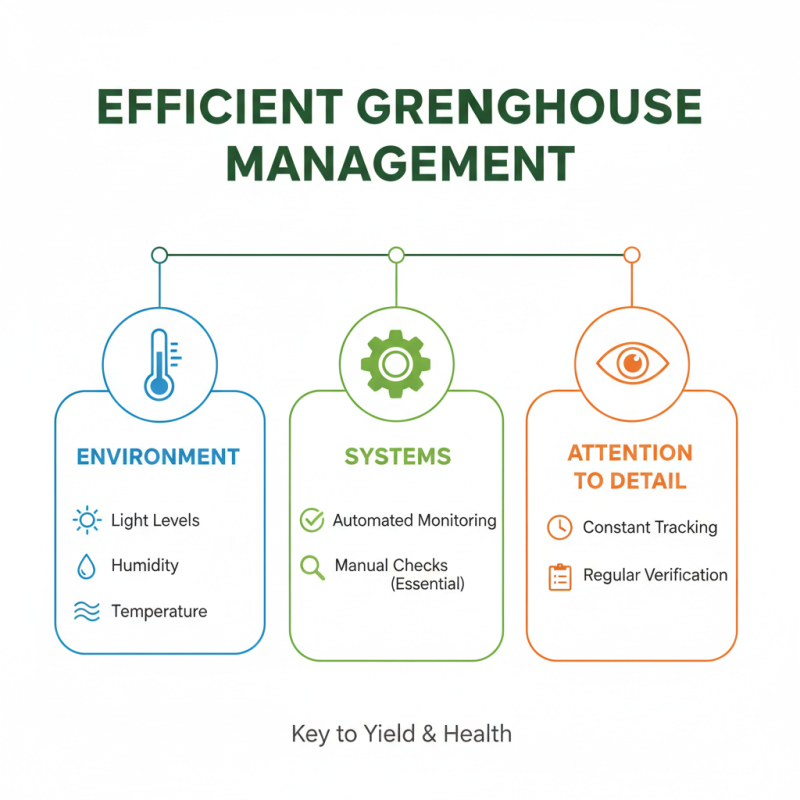
Efficient management in commercial greenhouses requires careful attention to detail. One important aspect is monitoring environmental conditions. Temperature, humidity, and light levels need constant tracking. Using automated systems can help, but they are not foolproof. Regular manual checks are essential to ensure everything is functioning well.
Another critical area is resource management. Water usage must be optimized to prevent waste. It can be easy to overlook this, leading to increased costs. Implementing rainwater harvesting can be an effective solution. However, this practice also requires maintenance and careful planning to be effective.
Staff training is often underestimated. Employees should understand best practices and the tools they use. Regular training sessions can improve performance but can be time-consuming. Addressing staff retention is another challenge. Keeping skilled workers is vital for a productive greenhouse operation. Engaging with employees may lead to better retention rates.